



Hot Tags
Roller Coater Vs. Curtain Coater: How to Choose the Right Coating Process
October 20, 2026


Choosing between a Roller Coater Vs Curtain Coater should start with the coating film you need to create—not simply with machine speed or purchase price.
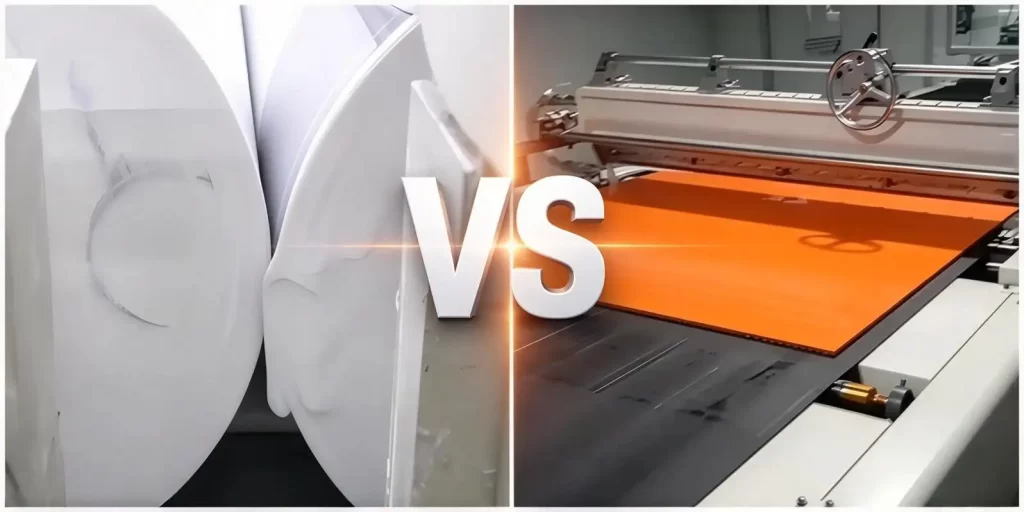
Both processes are widely used for flat panels, but they form the wet coating in fundamentally different ways. A roller coater transfers a metered layer through physical roller contact, while a curtain coater lets the substrate pass through a continuous falling curtain of liquid coating.
That difference affects coating weight, leveling, surface appearance, coating rheology, substrate requirements, and how the machine fits into a complete finishing line.
Roller Coater Vs. Curtain Coater: How Do They Apply Coating?
Roller Coater: Metering and Contact Transfer
A roller coater normally uses an application rubber roller and doctor steel roller. Coating is supplied between the rollers, metered, and then transferred to the moving panel.
The coating result depends on several interacting parameters:
• Roller gap and pressure;
• Application roller material and hardness;
• Coating viscosity;
• Roller and conveyor speed;
• Substrate thickness and flatness;
• Required coating weight.
This makes roller coating particularly useful when the process requires a controlled, repeatable layer for primer, sealer, color coating, or other flat-panel applications.
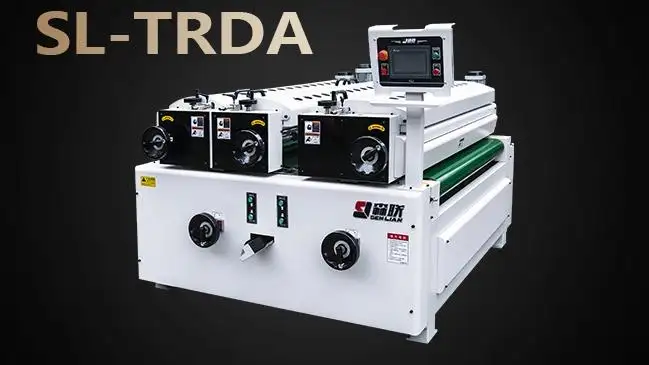
Senlian's roller coating machine uses a rubber application roller with a doctor steel roller and a circulating paint system. Its listed compatible coatings include UV, PU, PE, NC, AC, water-based, fluorocarbon coatings, glue, and other liquid coatings.
Curtain Coater: Non-Contact Film Formation
A curtain coater works differently. Coating flows through a precision knife head and forms a continuous liquid curtain. The panel passes through this curtain at controlled conveyor speed.
Important variables include:
• Viscosity and temperature;
• Surface tension;
• Knife-head setting;
• Curtain stability;
• Panel speed;
• Coating density and solids content.
Because the final wet film is not transferred by an application roller, curtain coating is often evaluated for thicker wet films and smooth, high-gloss finishes.
Senlian's split curtain coater separates the coating body from the conveyor sections to reduce vibration that could disturb the liquid curtain and cause waves or uneven coating.
Roller Coater Vs Curtain Coater: Technical Comparison
| Factor | Roller Coater | Curtain Coater |
| Coating principle | Contact transfer | Non-contact liquid curtain |
| Main film control | Roller gap, speed, rheology | Flow, curtain stability, conveyor speed |
| Thin metered layers | Often suitable | Requires stable curtain conditions |
| Higher wet-film build | Process-dependent | Often worth evaluating |
| Surface contact | Yes | No |
| High-gloss topcoat | Possible with correct process | Frequently selected |
| Main risk | Transfer variation / roller marks | Curtain breakup / waves |
| Typical role | Primer, sealer, base or color layer | Topcoat, higher-build or gloss layer |
The Roller Coater Vs Curtain Coater decision therefore depends on process requirements rather than a simple quality ranking.
Which System Gives Better Coating Thickness Control?
For relatively thin, metered coatings, a roller coater provides direct mechanical control through the relationship between the doctor roller, application roller, coating rheology, and line speed.
However, specifying a roller gap alone does not guarantee a certain dry-film thickness. Solids content, transfer behavior, roller condition, and substrate absorption also matter.
Curtain coating controls film formation mainly through coating flow and conveyor speed. Increasing coating supply without matching speed or rheology can destabilize the curtain rather than simply create a thicker film.
For either process, buyers should verify coating performance using the actual:
Substrate + Coating Formulation + Target Coating Weight + Production Speed.
Useful trial measurements include coating weight in g/m², cross-width uniformity, wet-film thickness, gloss, surface defects, and repeatability across consecutive panels.
Surface Finish: Why Curtain Coating Is Often Used for High Gloss
"Better finish" should be defined before comparing Roller Coater Vs Curtain Coater.
A finished surface may be evaluated for:
• Gloss;
• Leveling;
• Orange peel;
• Roller marks;
• Pinholes;
• Color consistency;
• Coating build.
Roller coating can produce controlled and uniform surfaces, but the application roller physically contacts the wet coating during transfer.
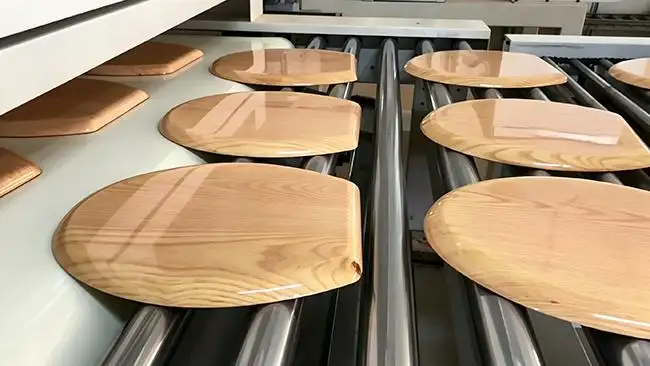
Curtain coating forms the final wet layer without that transfer contact. This makes it particularly relevant where smooth leveling or a high-gloss topcoat is required. Senlian specifically positions its UV curtain coating equipment for high-gloss and mirror-like finishes.
Coating Rheology Can Change the Decision
Machine type alone cannot determine coating quality.
| Coating Property | Process Impact |
| Viscosity | Affects roller transfer and curtain formation |
| Surface tension | Influences wetting and curtain stability |
| Solids content | Changes final dry-film build |
| Temperature | Changes viscosity during production |
| Pot life | Important for reactive coating systems |
| Leveling | Directly affects appearance after application |
The correct sequence is:
Coating Chemistry → Rheology → Coating Weight → Surface Requirement → Equipment Configuration.
Substrate Flatness Also Matters
A roller coater depends on physical contact.
Panel thickness variation, warpage, roughness, or inconsistent sanding can change roller contact and therefore coating transfer.
Curtain coating is non-contact at the application point, but that does not mean substrate condition is irrelevant. Panels still need stable conveying, controlled thickness, and suitable surface preparation for consistent wetting and curing.
Do Not Compare Production Speed Alone
Machine speed is only one part of coating-line capacity.
Actual output depends on:
Coating Speed → Heating Leveling → Drying Or Curing → Handling.
A fast coater does not create a fast line when downstream curing becomes the bottleneck.
This is why Roller Coater Vs Curtain Coater should be evaluated as part of a process line, not only as two standalone machines.
When Should Roller and Curtain Coaters Be Used Together?
For multi-layer finishing, the correct answer may be neither "roller" nor "curtain" alone.
A possible process route is:
Substrate Sanding → Cleaning → Roller Primer → Drying/Curing → Primer Sanding → Cleaning → Roller Base Coat → Curtain Topcoat → Leveling → UV Curing
The roller stages can apply primers and base coats. The curtain stage can apply successive, higher build coats for top coats and clear coats.
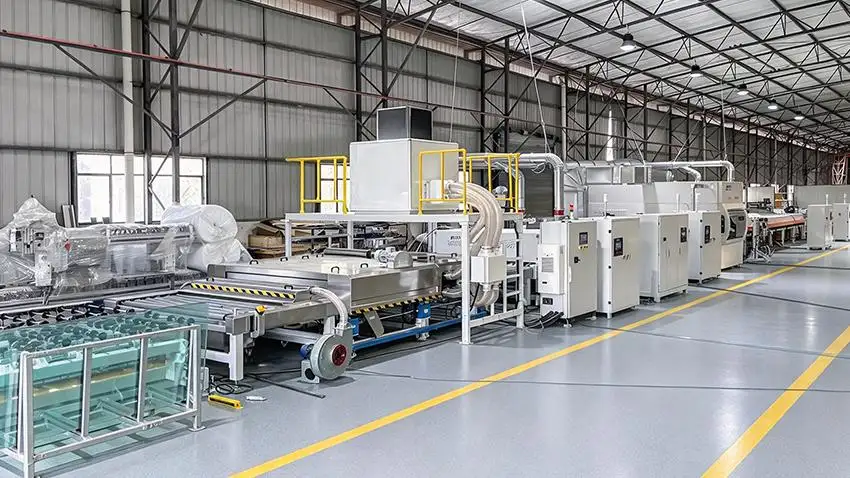
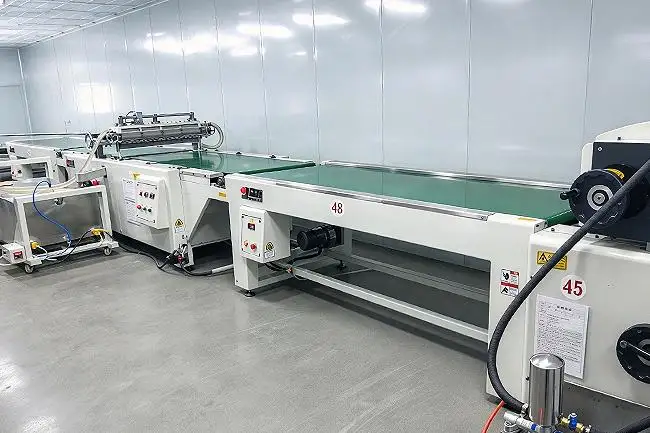
A similar design is used by Senlian in their UV curtain coating line, where primer/base coat roller stages are followed by a series of curtain coating, UV and IR curing stages.
What Should Buyers Verify Before Purchasing?
Before requesting a Roller Coater Vs Curtain Coater proposal, provide the supplier with:
• Substrate material and dimensions;
• Thickness tolerance and surface condition;
• Coating chemistry and viscosity;
• Solids content;
• Required coating weight;
• Gloss or surface requirement;
• Target production speed;
• Drying or curing method;
Upstream and downstream processes.
Then run coating trials with the actual material whenever possible.
The final decision should follow:
Product → Coating → Film Requirement → Surface Quality → Line Speed → Curing → Equipment Configuration.
Senlian offers multiple kinds of equipment for different parts of a flat-panel finishing line. Unlike competitors, Senlian does not limit themselves to a single machine type. For a given process step, Senlian offers different equipment types (i.e. roller or curtain coaters, conveyors, and drying equipment, etc.)
Prospective customers are encouraged to see demonstrations of Senlian's coating equipment and describe their substrates and finish requirements to determine the best type of coating process. Senlian has automated equipment for roller coating and curtain coating processes.
FAQs
Q1. Does Senlian manufacture both roller coaters and curtain coaters?
Yes. Senlian supplies roller coating machines, curtain coating machines, and integrated coating lines for flat-panel finishing applications.
Q2. How does Senlian help choose between a roller coater and curtain coater?
Senlian can evaluate the substrate, coating type, viscosity, target coating weight, surface finish, production speed, and curing process before recommending a configuration.
Q3. Can Senlian combine roller coating and curtain coating in one production line?
Yes. Senlian offers coating lines that can integrate roller coating, curtain coating, drying or heating, conveying, and UV curing processes.
Q4. What coatings can Senlian roller coating machines process?
Depending on the machine and application, Senlian lists compatibility with coatings such as UV, PU, PE, NC, AC, water-based coatings, fluorocarbon coatings, and glue.
Q5. Is a Senlian curtain coater suitable for high-gloss finishing?
Curtain coating is particularly relevant for smooth and high-gloss topcoat applications because its mechanical structure allows for a larger amount of paint to be applied to the panel surface in one go, resulting in a fine, uniform, mirror-like coating.