



Hot Tags
Graco Paint Spray Machine: Airless vs Air-Assisted Airless Spray Technology Explained
October 21, 2026


For an industrial coating line, selecting a Graco Paint Spray Machine is not simply a choice between airless and air-assisted airless. The correct configuration depends on how coating viscosity, fluid pressure, tip size, required film build, gun movement and production speed interact.
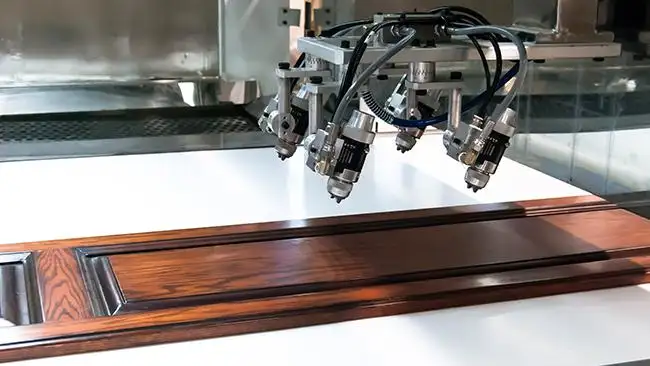
From Senlian's perspective as an automatic coating equipment manufacturer, the spray gun is only one part of the process. A stable coating result requires the paint-delivery system, atomization method, gun motion, conveyor and booth airflow to work as one system.
How a Graco Paint Spray Machine Atomizes Coating
Airless: Atomization by Hydraulic Energy
A conventional airless Graco Paint Spray Machine pressurizes coating and forces it through a small tip orifice. The sudden pressure drop at the tip breaks the liquid stream into droplets.
The basic process is:
Pump → Fluid Pressure → Tip Orifice → Pressure Drop → Atomization → Spray Pattern
Graco states that airless technology is particularly suited to medium- and high-viscosity fluids. Tip size controls flow and pattern characteristics, while sufficient hydraulic pressure is required to develop a complete spray fan.
Higher pressure, however, should not be treated as a universal solution. Once stable atomization is achieved, further pressure increases can raise fluid velocity and overspray without necessarily producing a proportional improvement in surface finish.
Air-Assisted Airless: Hydraulic Atomization Plus Shaping Air
With an air-assisted airless Graco Paint Spray Machine, hydraulic pressure still performs most of the atomization. A relatively small amount of compressed air is introduced through the air cap to refine the droplets and complete the fan edges.
Graco offers typical reference ranges of:
•Air-Assisted Airless fluid pressure: 500–1,500 psi
•Traditional Airless fluid pressure: 1,500–3,000 psi
•Assist air: approximately 5–35 psi
These are technology reference ranges rather than universal machine settings.
Because the assist air helps eliminate heavy fan edges or "tails," Air-Assisted Airless can provide finer atomization at lower fluid pressure than conventional airless.
Airless vs Air-Assisted Airless: Engineering Comparison
| Process Factor | Airless | Air-Assisted Airless |
| Main atomization energy | Hydraulic pressure | Hydraulic pressure + assist air |
| Fluid pressure | Higher | Lower |
| Compressed air | Not required for atomization | Required for fan refinement |
| Material output | High | High |
| Fine-finish capability | Moderate | Higher |
| Typical viscosity | Medium to high | Medium to high |
| Typical priority | Coverage and film build | Output plus finish control |
| Common applications | Protective coatings, large surfaces | Furniture, wood finishing, metal parts |
Graco describes Air-Assisted Airless as particularly useful where high production output must be combined with a relatively smooth finish, including wood furniture topcoats and fabricated metal components.
Pressure, Tip Size and Viscosity Must Be Selected Together
The performance of a Graco Paint Spray Machine cannot be evaluated from pressure alone.
1. Coating Viscosity
Higher viscosity creates greater resistance to atomization. The process may require:
•More hydraulic pressure;
•A suitable larger tip orifice;
•Coating temperature or viscosity control;
Air-Assisted Airless atomization where finer finish is required.
2. Spray Tip
Tip selection affects both flow rate and fan geometry. Increasing tip size without checking pump capacity can cause pressure drop when several guns open simultaneously.
3. Fluid Pressure
Pressure must be sufficient to establish a complete fan. Typical symptoms of insufficient atomization include:
•Coarse droplets;
•Visible fan tails;
•Uneven film build;
•Poor edge blending.
The correct setting is therefore the lowest stable operating pressure that produces the required atomization and film result, rather than simply the maximum available pressure.
Why Pump Capacity Matters in Automatic Spraying
A manual Graco Paint Spray Machine and an eight-gun automatic system place very different demands on paint delivery.
For multiple guns:
Total gun demand ≤ Available pump flow at required operating pressure
If pump recovery cannot match simultaneous gun demand, pressure can fluctuate during the spray cycle. The result may appear as changes in fan width, atomization or wet-film thickness.
This becomes particularly important on reciprocating lines where several guns repeatedly switch on and off according to workpiece position.
Matching Spray Guns with Conveyor and Reciprocating Speed
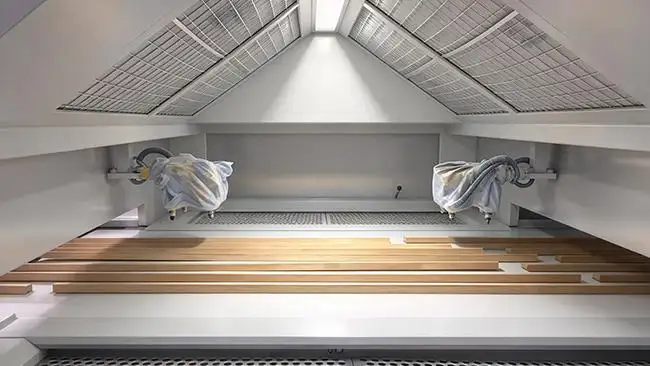
In Senlian automatic lines, coating thickness is also influenced by mechanical motion:
Material Flow + Fan Width + Overlap + Gun Speed + Conveyor Speed = Applied Film
For flat panels, increasing conveyor speed reduces coating deposited per unit area unless material flow, gun speed or pass strategy is adjusted accordingly.
Excessive overlap can cause:
•Local wet-film buildup;
•Edge accumulation;
•Sagging.
Insufficient overlap can create:
•Visible striping;
•Thin-film zones;
•Inconsistent color or gloss.
This is why a Graco Paint Spray Machine used in automatic production should be commissioned together with the motion system rather than adjusted independently.
Diagnosing Common Spray Defects
| Defect | Parameters to Check First |
| Fan tails | Pressure, viscosity, tip condition, assist air |
| Orange peel | Droplet size, viscosity, film build, leveling |
| Runs/sags | Material flow, overlap, gun speed |
| Dry spray | Gun distance, atomization, airflow, evaporation |
| Uneven film | Pump stability, gun distance, reciprocation, conveyor speed |
Changing pressure alone can hide the real cause. A coating defect may originate from material properties, mechanical movement or booth conditions rather than the spray gun itself.
How Senlian Integrates GRACO Air-Mix Technology
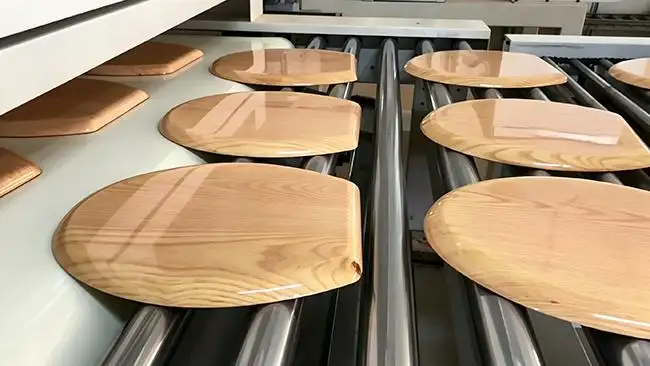
Senlian uses GRACO spraying components as part of complete automatic coating equipment rather than treating the Graco Paint Spray Machine as an isolated component.
For example, Senlian's SL-TSWP-W reciprocating machine combines:
•Eight adjustable GRACO medium-pressure Air-Mix guns;
•Two independently servo-driven reciprocating carriages;
•GRACO Merkur bellows plunger pump;
•PLC-controlled spray sequencing;
•Automatic workpiece detection;
•Positive-pressure spray booth;
•Conveyor and automatic belt-cleaning system.
The standard machine lists a 3–7 m/min conveyor working speed and 1–1.8 m/s spray-gun speed. Its GRACO Merkur bellows pump is specified with a 24:1 pressure ratio and 9 L flow rating. Configuration can change according to the coating and production project.
For shaped doors, frames and furniture components that require changing spray angles, Senlian's five-axis system uses a GRACO Air-Mix gun supplied by a GRACO Merkur 30:1 plunger pump, while independent servo axes coordinate the spray trajectory.
What Should Buyers Specify Before Selecting the System?
Before specifying a Graco Paint Spray Machine or complete automatic line, Senlian recommends defining the process first:
•Coating type and viscosity range;
•Required wet/dry film thickness;
•Substrate and workpiece geometry;
•Maximum panel dimensions;
•Primer or topcoat application;
•Required surface finish;
•Number of simultaneous spray guns;
•Production speed;
•Color-change frequency;
•Drying or curing process.
The final configuration should then be verified through spray-pattern inspection, film-thickness measurement, pressure stability, coating consumption and production trials.
For manufacturers planning a new line or replacing a manual spraying process, Senlian can integrate GRACO Air-Mix paint delivery with reciprocating, five-axis, conveying, drying and curing equipment. Sharing actual workpiece dimensions, coating data and production targets allows Senlian to evaluate the Graco Paint Spray Machine as part of the complete coating process, rather than selecting the gun and pump in isolation.
FAQs
Q1. Does Senlian use GRACO spray equipment in its automatic spray systems?
Yes. Selected Senlian automatic spray machines can integrate GRACO Air-Mix spray guns and GRACO paint delivery pumps.
Q2. Can Senlian integrate a Graco Paint Spray Machine into an automatic coating line?
Yes. Senlian can combine GRACO spraying equipment with reciprocating motion, conveyors, PLC controls, spray booths, drying, and curing equipment.
Q3. What coatings can Senlian spray systems handle?
Depending on system configuration, Senlian equipment can be designed for UV, PU, water-based, primer, topcoat, and other compatible industrial coatings.
Q4. Does Senlian offer Air-Assisted Airless spray solutions?
Yes. Senlian uses GRACO Air-Mix technology in selected reciprocating and multi-axis automatic spray equipment.
Q5. How does Senlian select the correct GRACO spray gun configuration?
Selection is based on coating viscosity, material flow, finish requirement, workpiece geometry, production speed, and required film thickness.