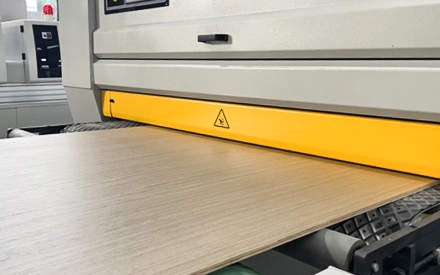
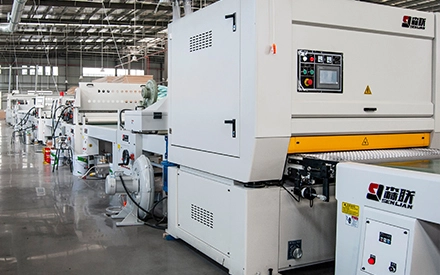
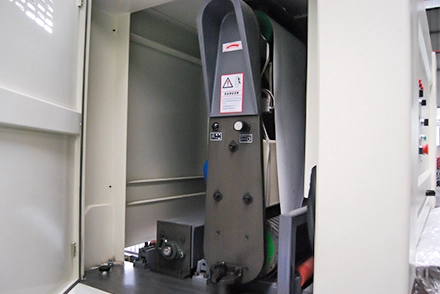
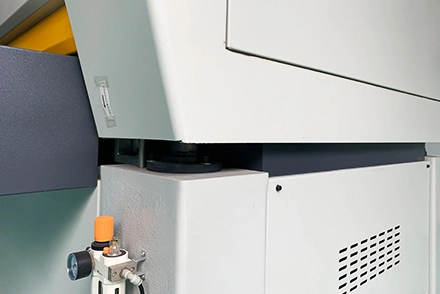
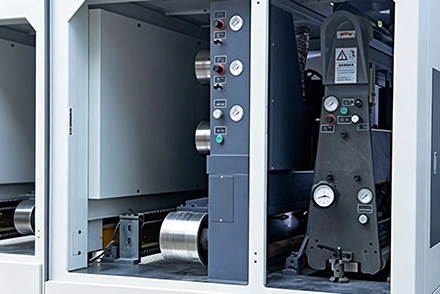
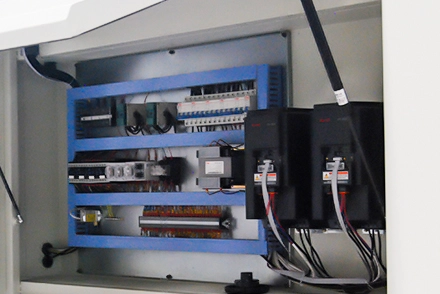
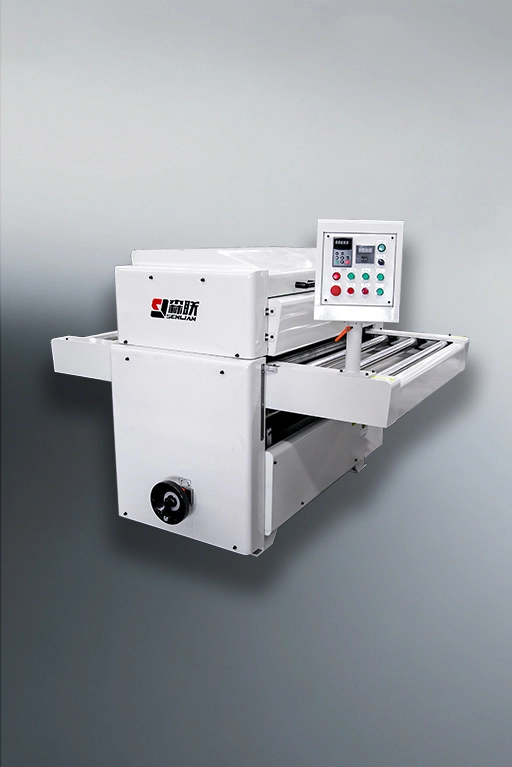
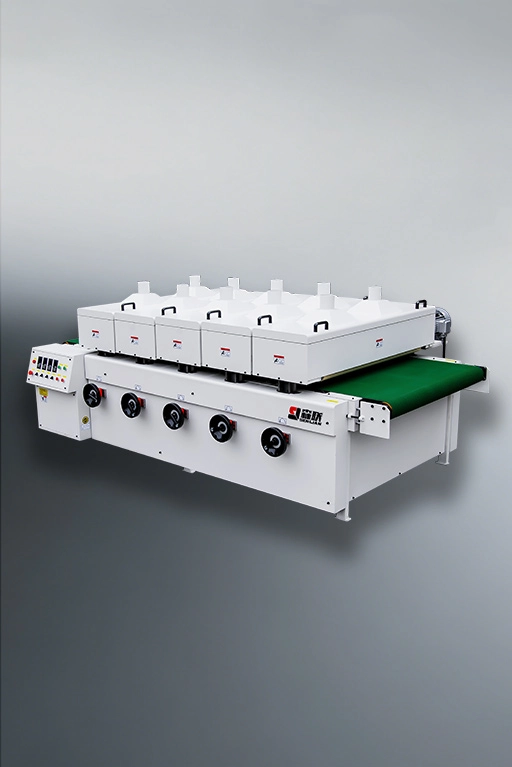
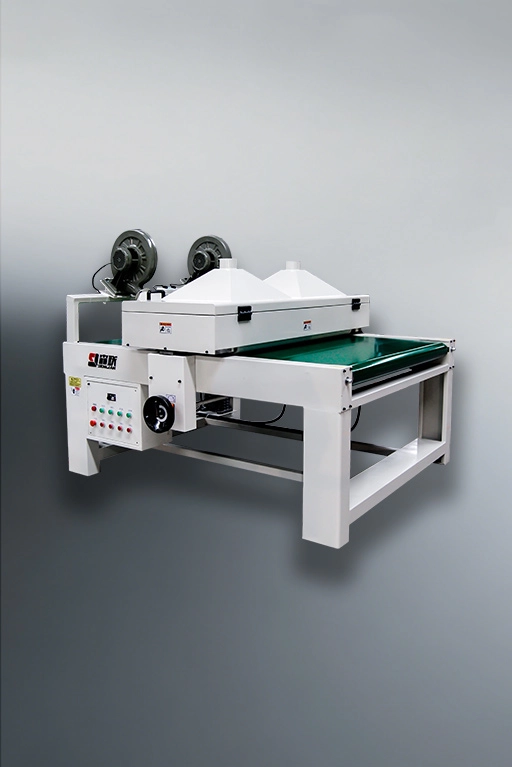
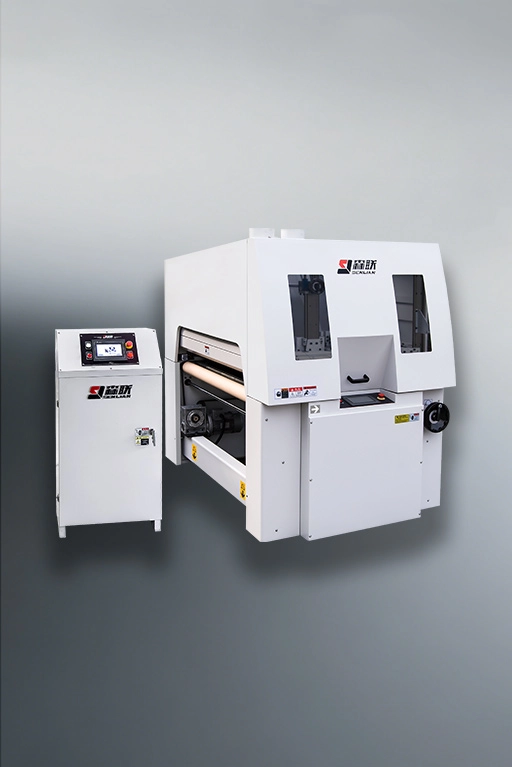
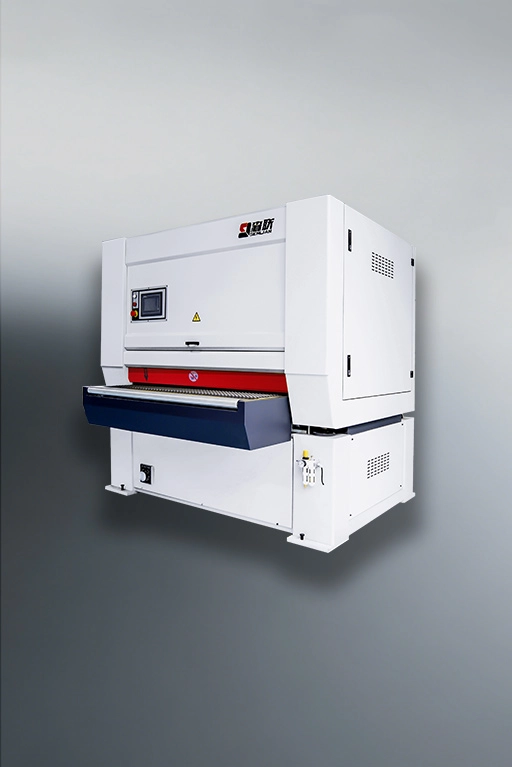
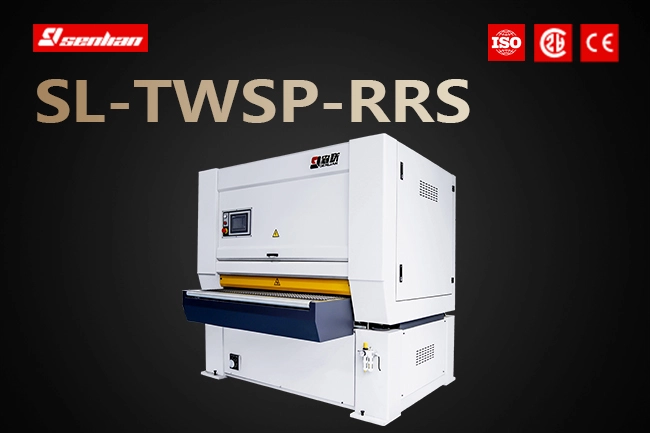
The primer sanding machine prepares coated flat panels for the next finishing layer by leveling primer surfaces and removing visible coating irregularities before topcoat application. A vertically moving sanding belt works across the panel while the fixed worktable keeps the conveying path aligned with adjacent equipment. Automatic thickness detection and pneumatic sanding-frame movement help the process follow changing workpiece dimensions without interrupting line flow.
Set the Sanding Process Around the Coated Surface
Before production, you can match the sanding setup to the panel and primer condition:
- Maximum workpiece width
- Primer type and cured surface condition
- Panel thickness
- Required sanding intensity
- Upstream and downstream conveyor height
- Production-line speed
- Dust extraction connection
- Available installation space
Three standard widths cover different panel formats. SL-TWSP-RRS1300 processes widths from 40 to 1300 mm, SL-TWSP-RRS1000 covers 40 to 1000 mm, and SL-TWSP-RRS630 handles 40 to 630 mm. Power and machine weight vary with the selected width.
Follow Panel Thickness With Vertical Sanding Movement
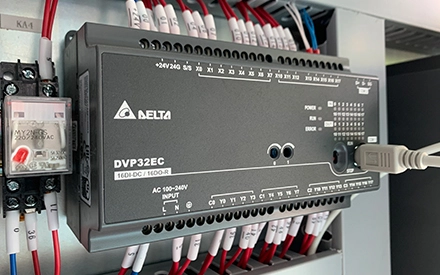
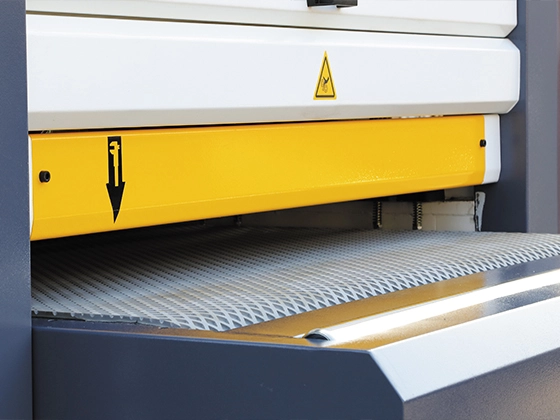
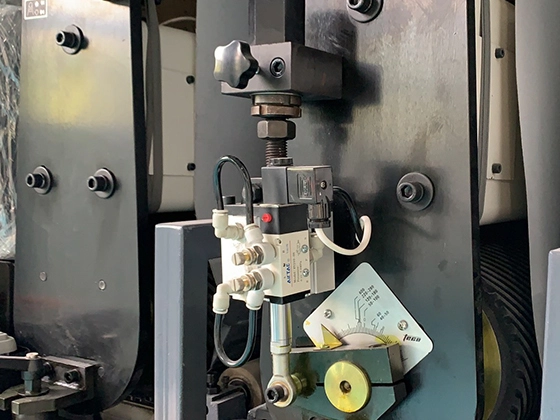
The worktable remains fixed while the sanding frames move vertically to establish the working clearance. At the machine inlet, the thickness-detection section reads each incoming panel before the workpiece reaches the sanding zone. The control system uses this information to coordinate the sanding position as panels move through the machine.
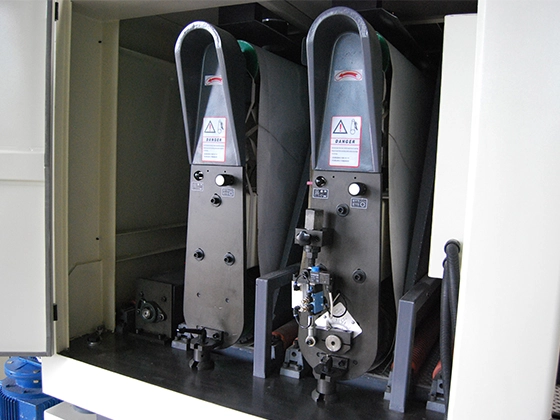
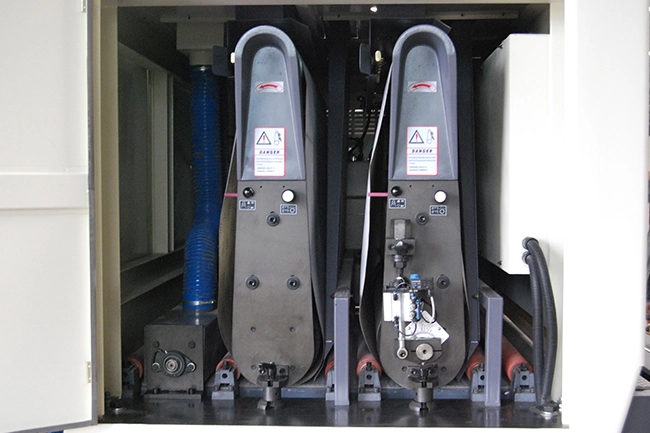
A floating double-frame arrangement allows the abrasive belts to work across the primer surface while the panel continues along the conveyor. The front frame also uses an eccentric-shaft lifting mechanism that can raise the sanding section during standby or an emergency stop.
Control Belt Tracking and Dust at the Sanding Zone
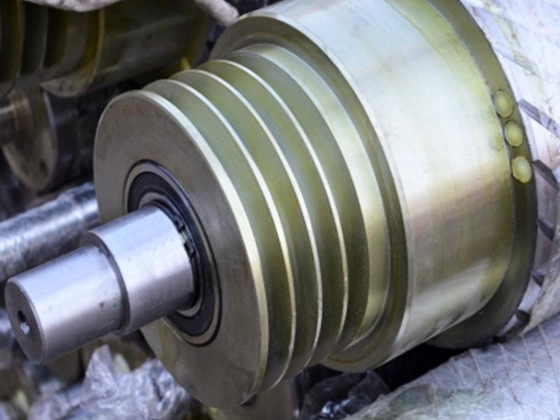
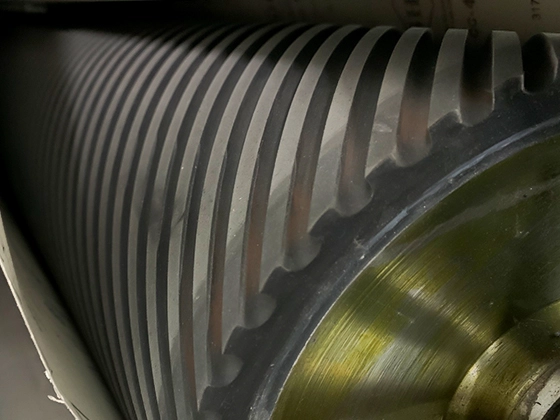
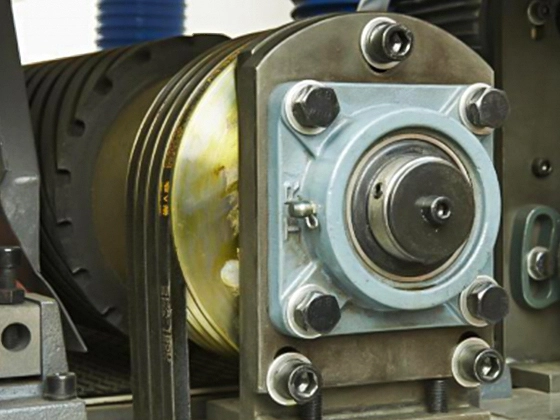
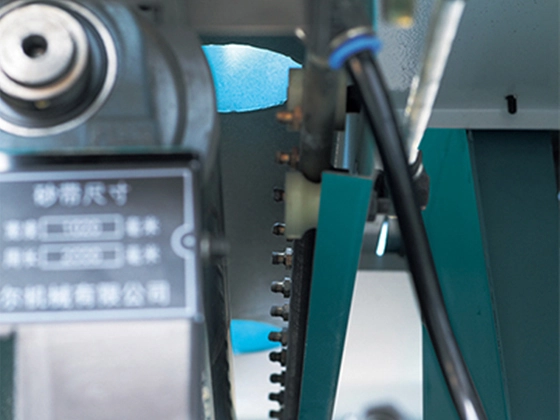
Each sanding shaft uses its own hanging plate and adjustment structure, allowing belt position to be corrected at the sanding frame. Oscillating air nozzles clear sanding dust from the abrasive belt during operation, while rear dust-removal brushes collect residual particles after the workpiece passes the sanding section.
These functions keep sanding, belt guidance, and dust removal close to the working area rather than relying on separate manual steps between processes.
Place Primer Sanding Between Coating Stages
You can integrate the equipment with a UV roller coating line after primer curing and before the next coating layer. It also sits naturally within the wider surface treatment equipment range when your process combines sanding with dust removal or other surface-preparation stages.
Different working widths, sanding-frame quantities, and lifting arrangements can be configured around the panel format and production-line setup. Final sanding settings should follow the actual primer condition, workpiece thickness, and surface requirement before the next coating stage.
Standard Parameters:






 Photo
Photo