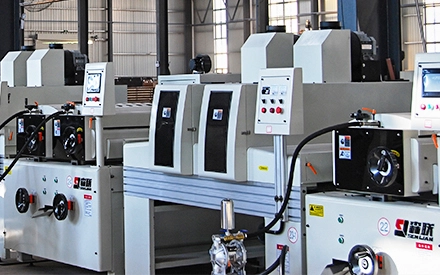
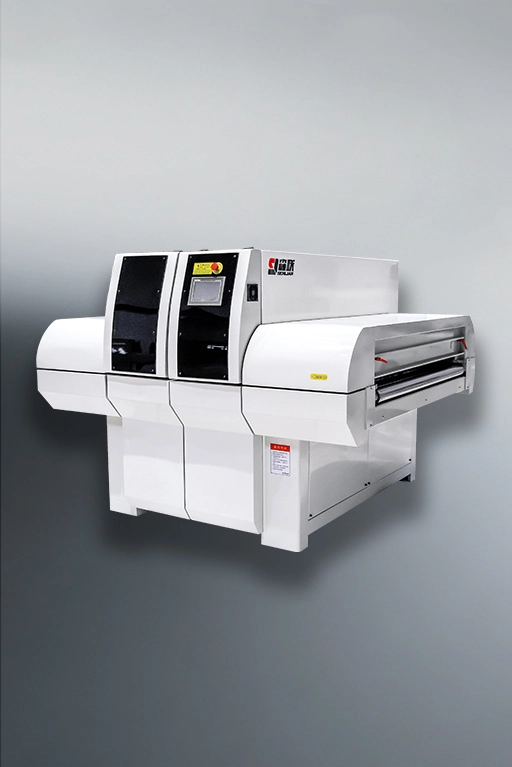
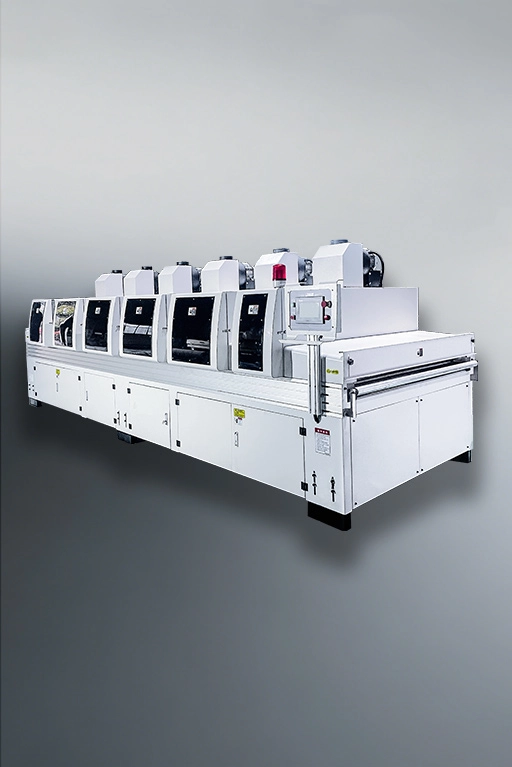
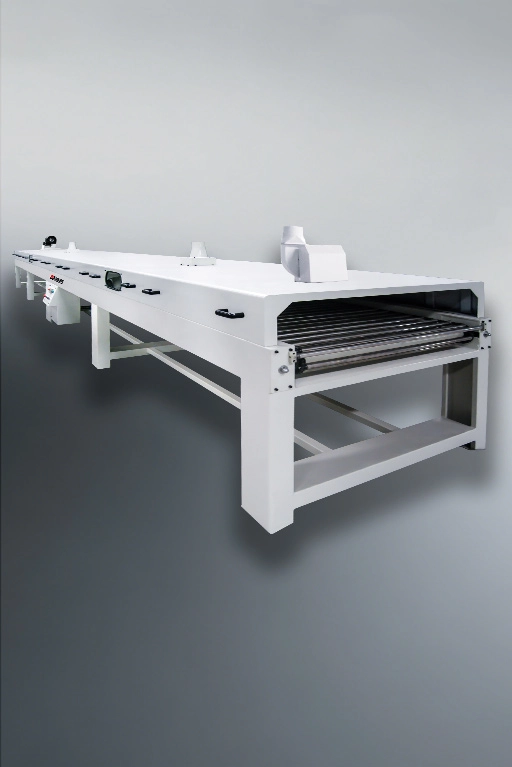
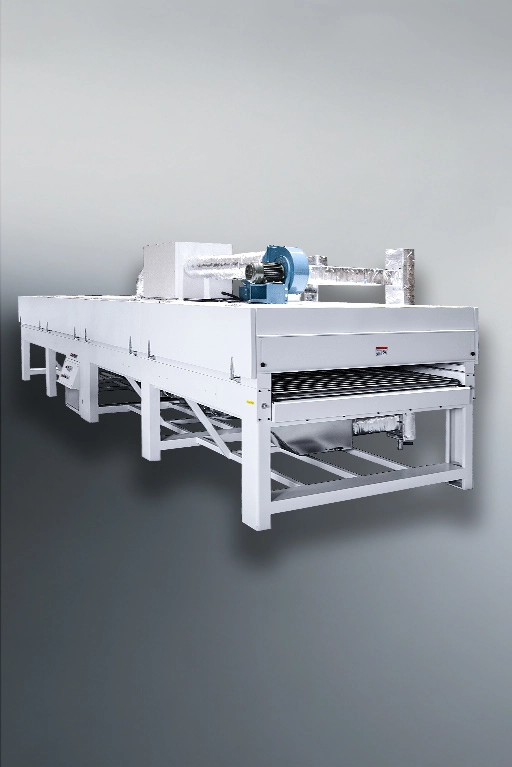
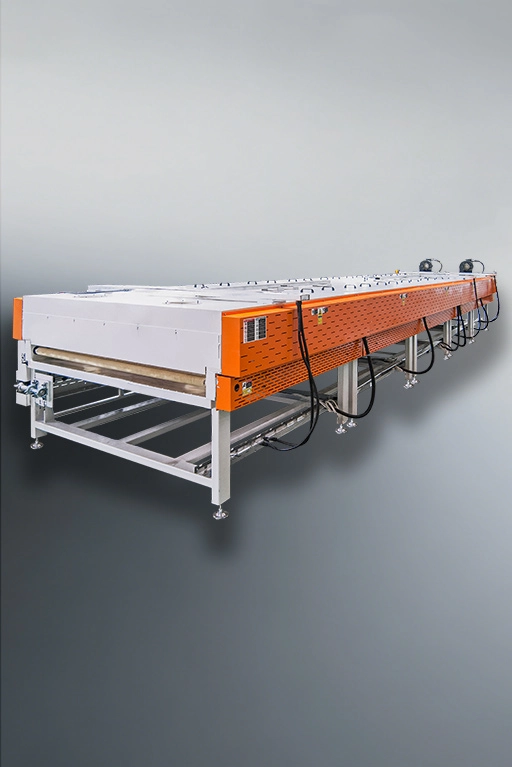
The UV curing machine converts compatible UV coatings from a liquid film into a cured surface within approximately 3–5 seconds. Three independent lamp sections irradiate the workpiece as it travels across the conveyor, allowing you to configure mercury, gallium, or iron light sources around clear, colored, or dark UV formulations. The process uses photochemical curing rather than a long thermal-drying cycle, keeping the curing section compact within a continuous finishing line.
Match the Lamp Source to the UV Coating
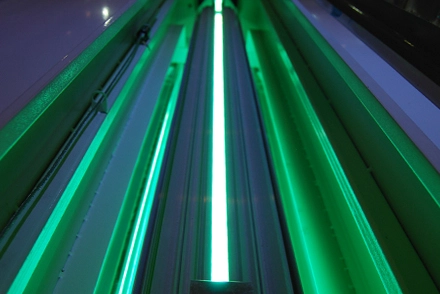
Different coating colors and formulations respond differently to UV wavelengths. Instead of relying on one lamp type for every finish, the three-lamp layout gives you flexibility to arrange light sources around the coating being processed.
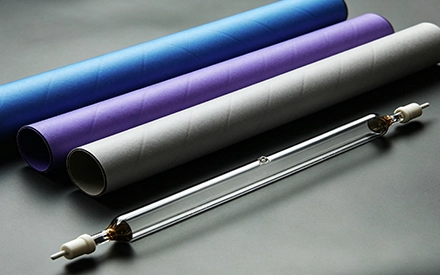
- Mercury lamps can be selected for compatible clear UV systems
- Gallium or iron lamps can support formulations that require a different spectral response
- Three separate lamp sections increase the available irradiation area
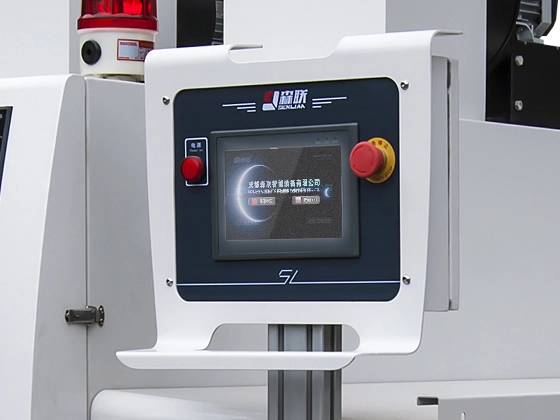
- UV intensity and conveyor functions are managed from the HMI
- Individual lamp housings can be opened for adjustment and replacement
This arrangement lets the curing setup follow the actual coating system rather than forcing all products through one fixed lamp combination.
Keep Each Lamp Section Accessible
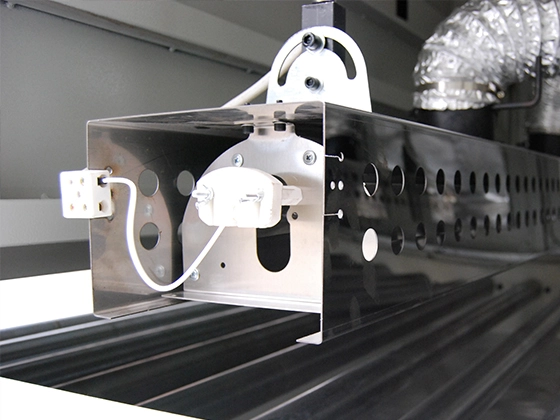
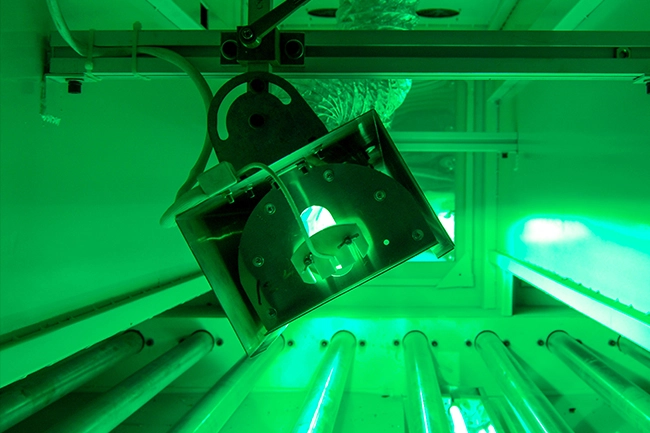
Every UV lamp sits inside a flip-open metal housing. Opening an individual section gives direct access to the lamp and reflector area for inspection, adjustment, or replacement without dismantling the complete curing tunnel.
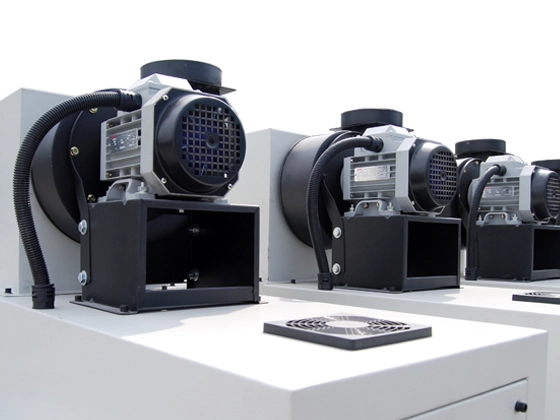
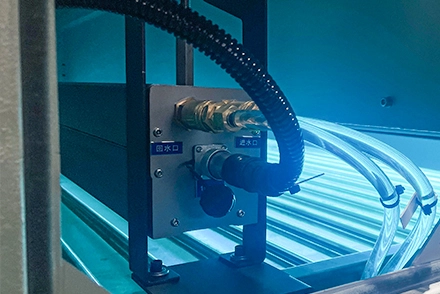
Three independent cooling fans are mounted above the lamp chambers. Heat generated around each UV source is extracted separately, helping keep ventilation close to the point where it is needed during continuous operation.
Carry Freshly Coated Panels on Steel Rollers
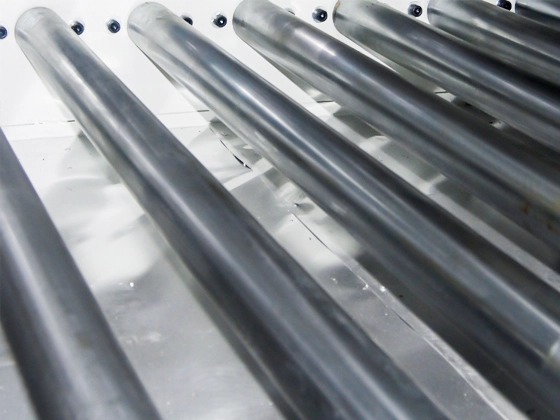
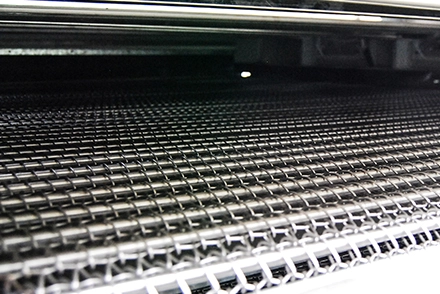
Stainless-steel rollers support workpieces through the irradiation zone without using a continuous belt directly beneath the coated surface. Frequency-controlled conveying lets you coordinate travel speed with the required exposure time and the surrounding coating equipment.
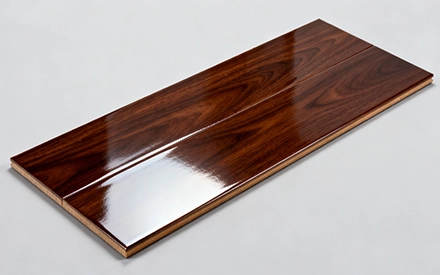
This layout suits flat materials including wood, veneer, MDF, particleboard, plywood, PVC, PET, glass, metal, marble, ceramics, fiber cement board, magnesium oxide board, and calcium silicate board when they use compatible UV coatings.
Close the Gap Between Coating and Final Cure
After UV paint is applied, panels can move directly into the curing section and continue downstream once the coating has reacted. You can integrate the equipment into a UV roller coating line or a UV curtain coating line where rapid curing follows coating application.
When your process calls for LED UV, Excimer UV, infrared, hot-air, or high-temperature drying instead, the wider paint drying oven range provides alternative curing and drying routes.
Standard Parameters:






 Photo