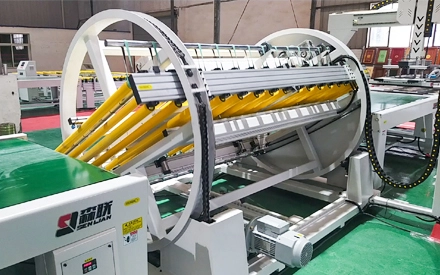
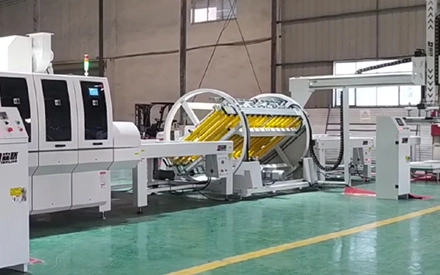
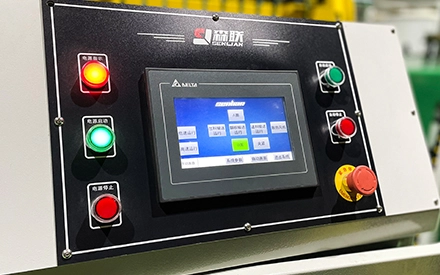
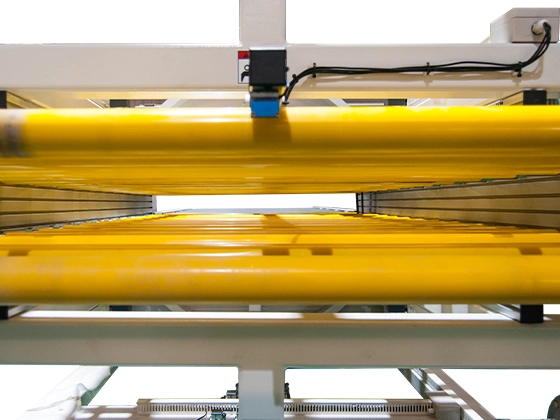
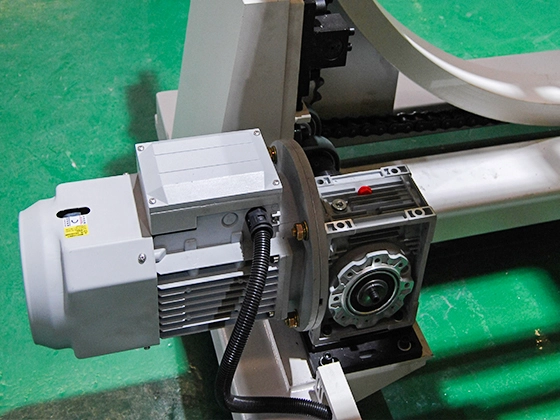
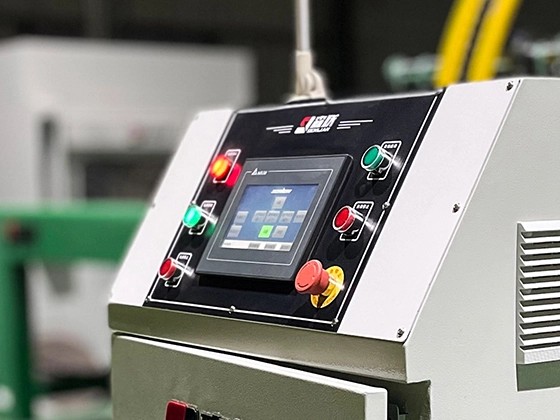
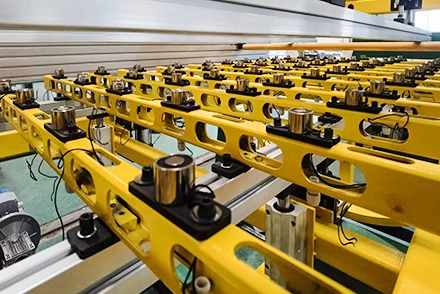
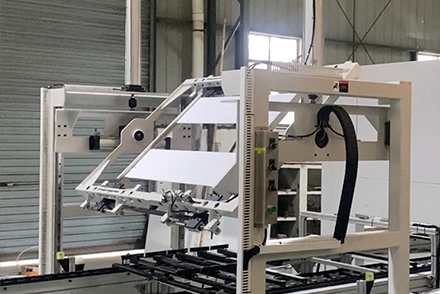
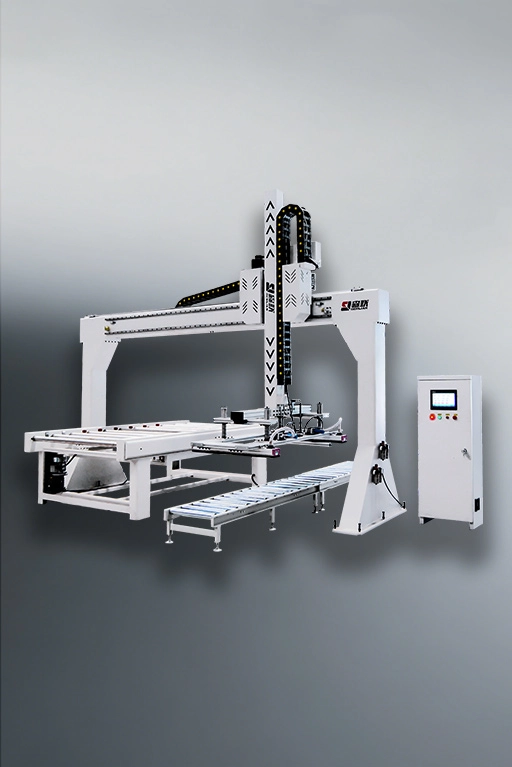
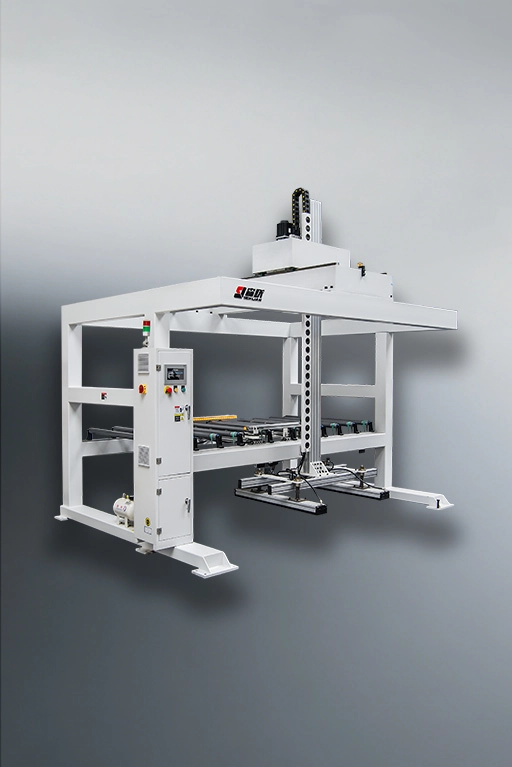
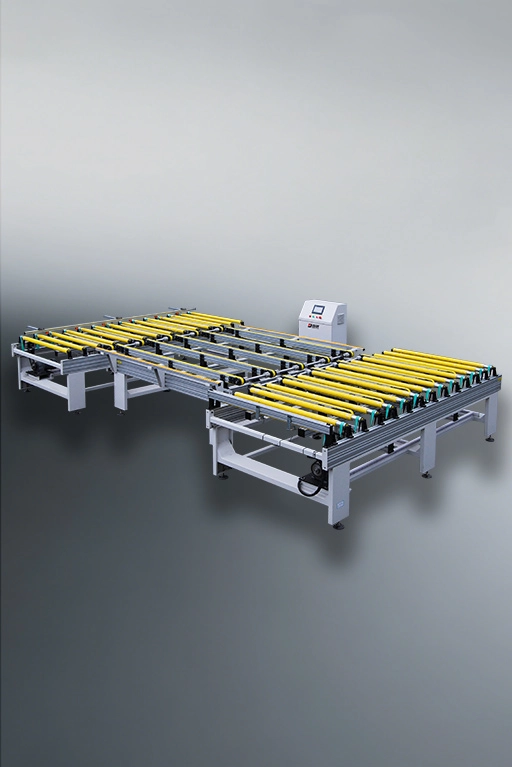
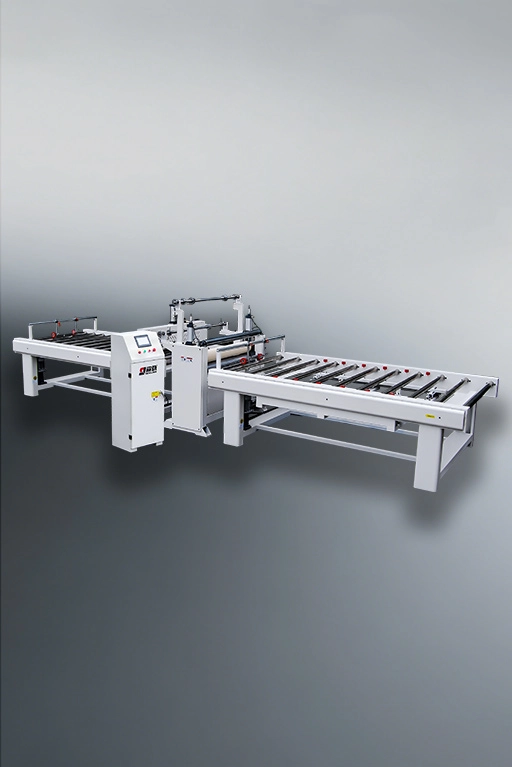
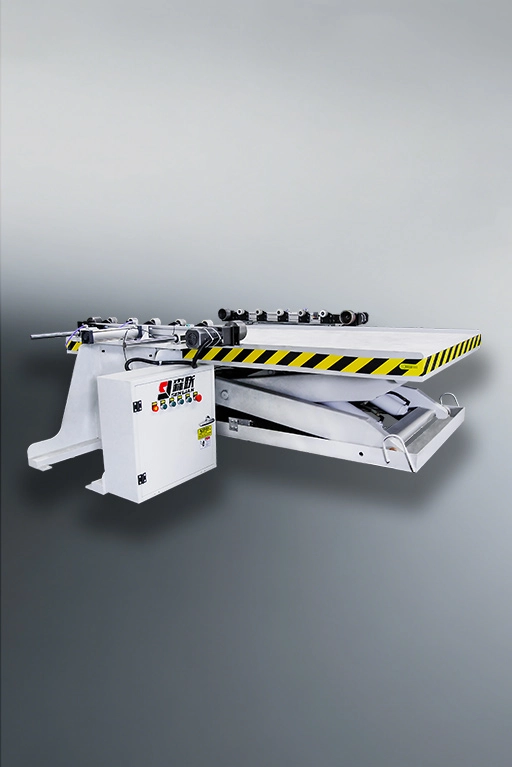
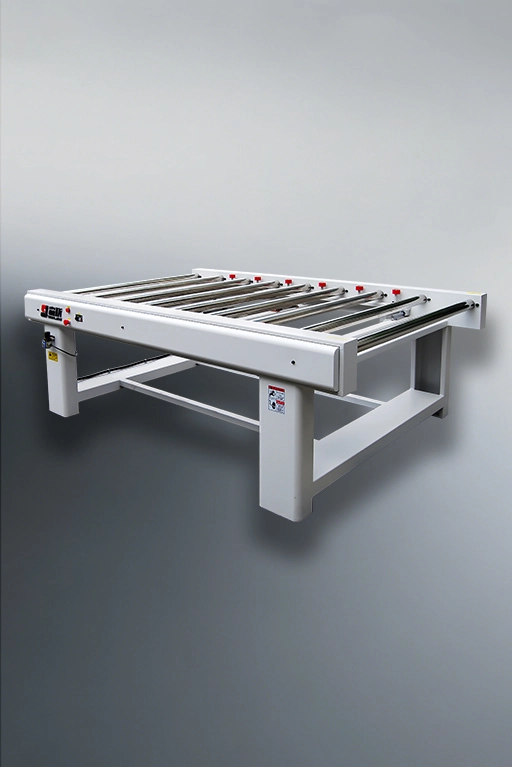
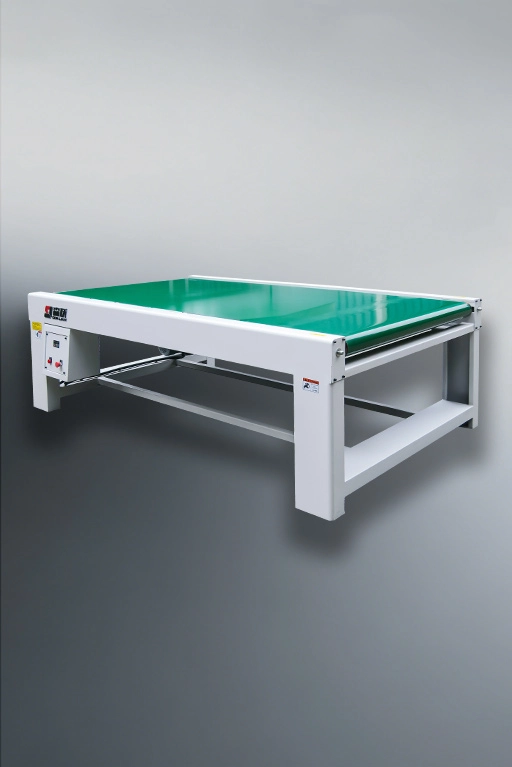
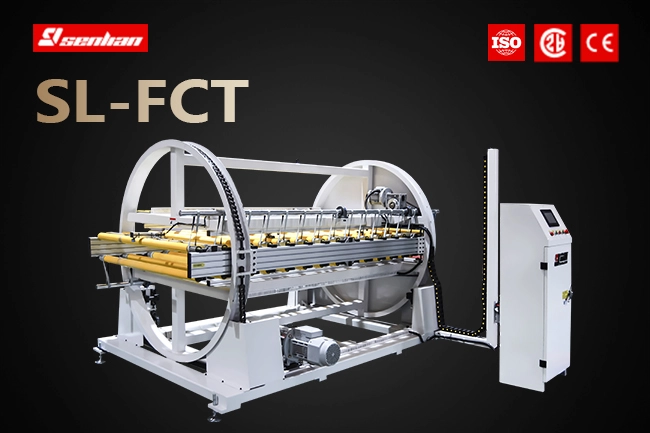
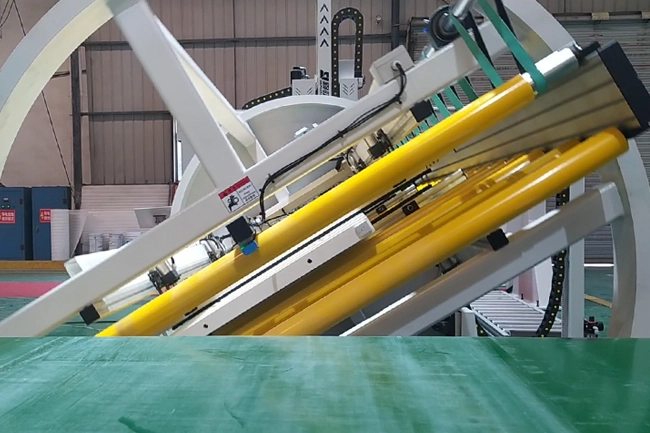
The Panel Turnover Machine rotates flat boards 180 degrees between connected processes, allowing the opposite surface to continue through coating or finishing without manual flipping. Double-layer rubber rollers hold the workpiece during rotation, while the motor-driven turnover structure and detection system coordinate clamping, rotation, and discharge. The machine can be integrated into an automatic conveyor route where two-sided processing is required.
Automatic Panel Flipping for Continuous Processing
Before selecting a configuration, confirm the main workpiece and line conditions:
- Maximum panel width, length, and thickness
- Material type and finished-surface condition
- Required feeding direction
- Conveyor connection height
- Production pace of adjacent equipment
- Available installation space
- Air supply and electrical requirements
These factors determine whether the turnover section can connect smoothly with the machines before and after it. The standard SL-FCT1300 handles panels up to 1280 mm wide and 2800 mm long, with a minimum processing length of 500 mm and a minimum thickness of 5 mm. Custom dimensions are available when the standard format does not match the product or line layout.
180-Degree Turnover With Controlled Panel Support
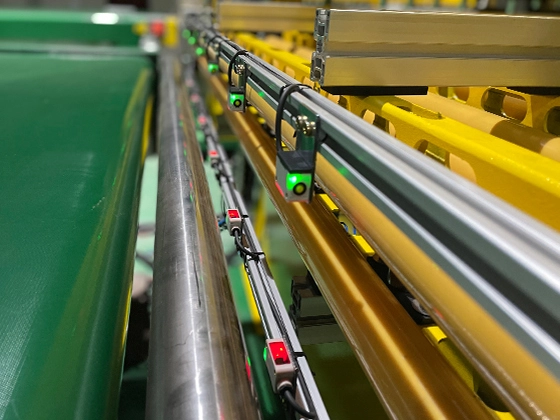
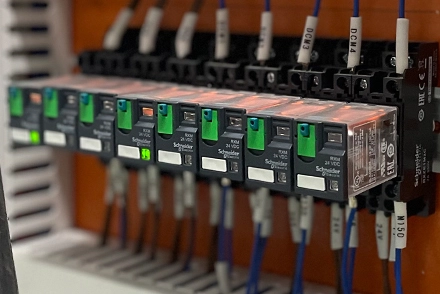
During operation, the incoming panel enters between the upper and lower rubber roller layers. The rollers secure the workpiece while the turnover frame rotates it through 180 degrees. Photoelectric detection monitors panel position and the turnover sequence, helping each step follow the programmed cycle before the panel continues to the next process.
This arrangement keeps the workpiece supported during transfer and removes repeated lifting and repositioning associated with manual turnover. Average working speed for the standard configuration is listed at 3 pieces per minute, while actual line performance should follow panel dimensions and the surrounding process.
Integration With Automatic Conveyor Systems
The turnover section works as part of a connected material-handling route rather than as an isolated processing machine. It can connect with the wider automatic conveyor range for loading, transfer, centering, or downstream handling.
Where both panel faces require processing, the turnover stage can also be positioned between suitable coating line configurations according to the actual finishing sequence.
Matching the Turnover Section to the Production Route
The standard model uses right-to-left conveying, an 850 mm bare conveyor height, and adjustable leveling height from 880 to 930 mm. Full power is 2.95 kW, and specified air pressure is 0.4–0.6 MPa.
Final selection should follow the panel dimensions, line direction, connection height, and process sequence so the turnover action fits the surrounding equipment without unnecessary transfer steps.
Standard Parameters:





 Photo