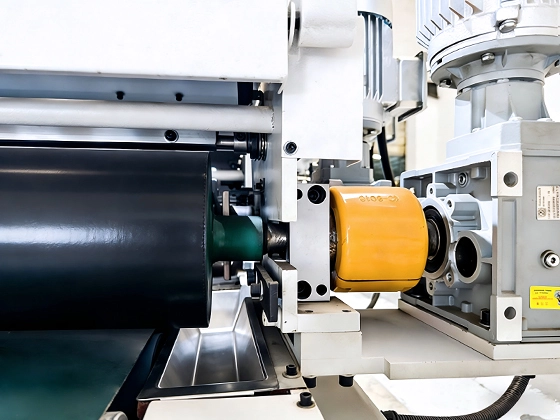
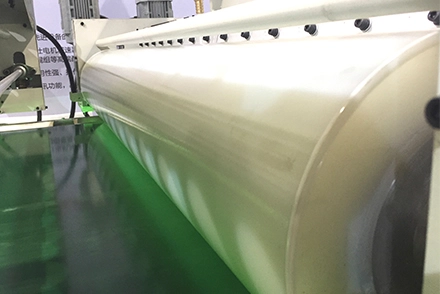
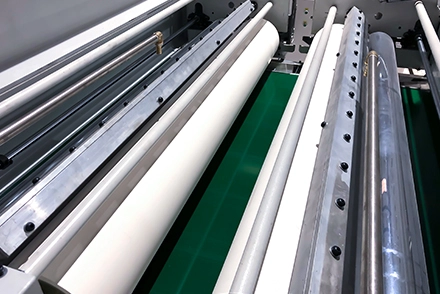
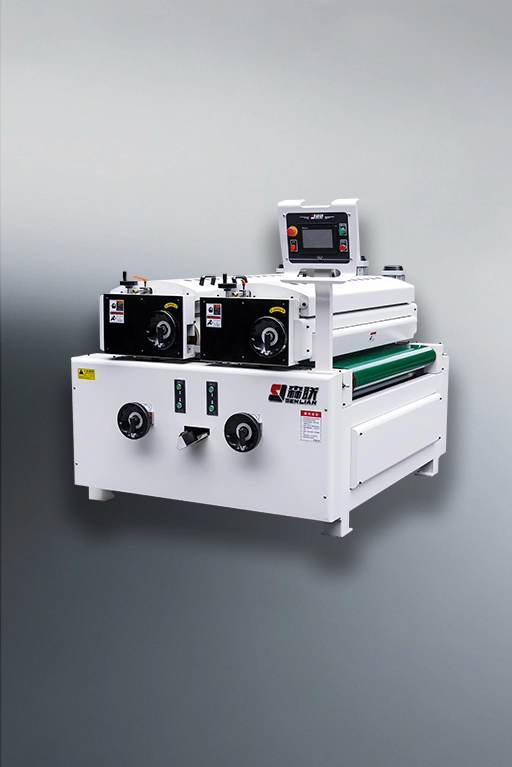
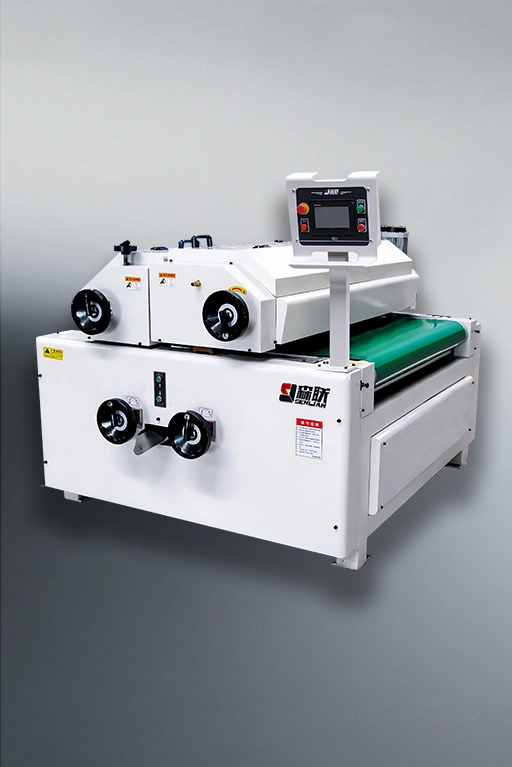
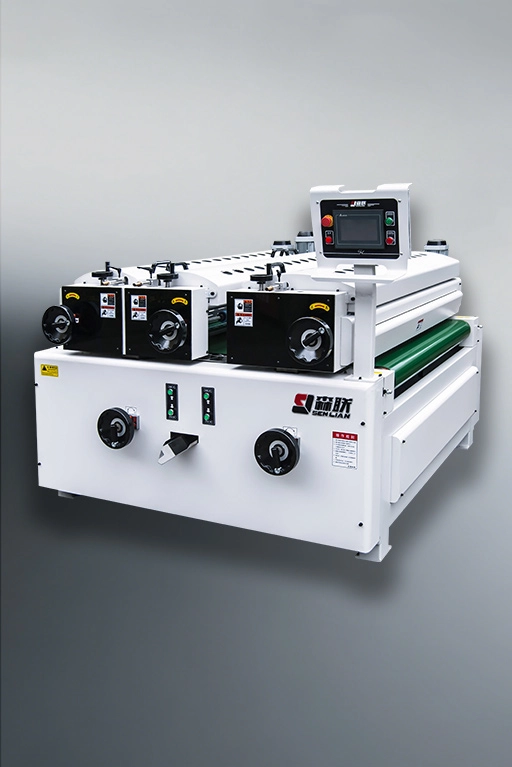
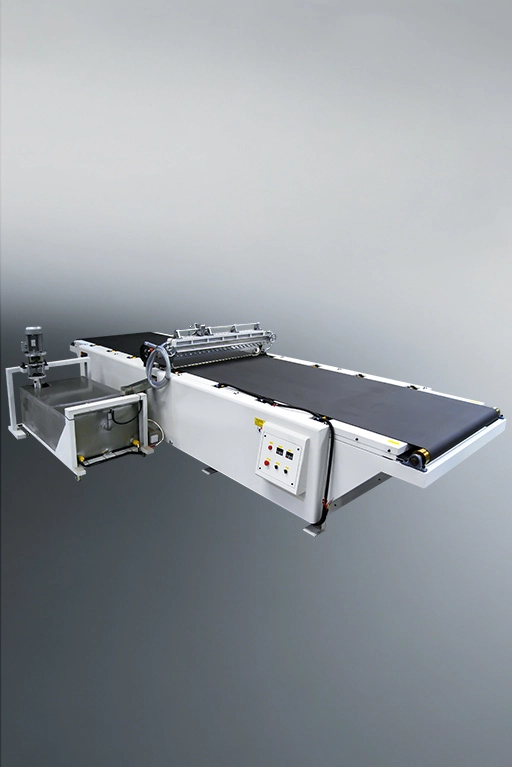
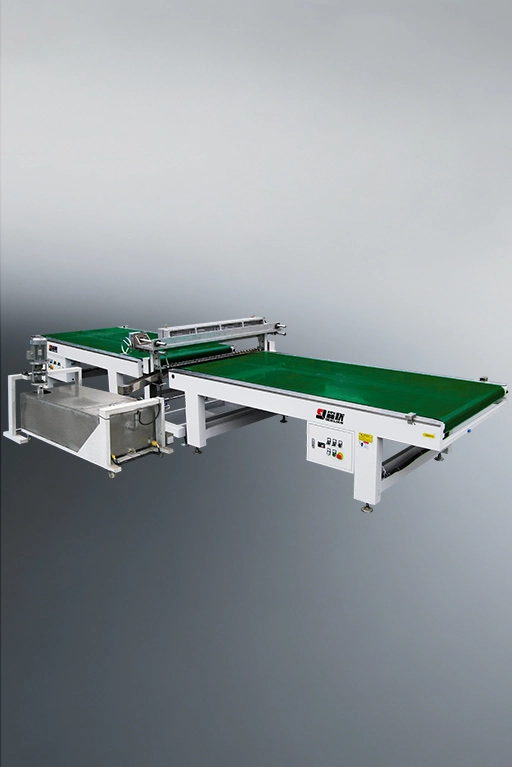
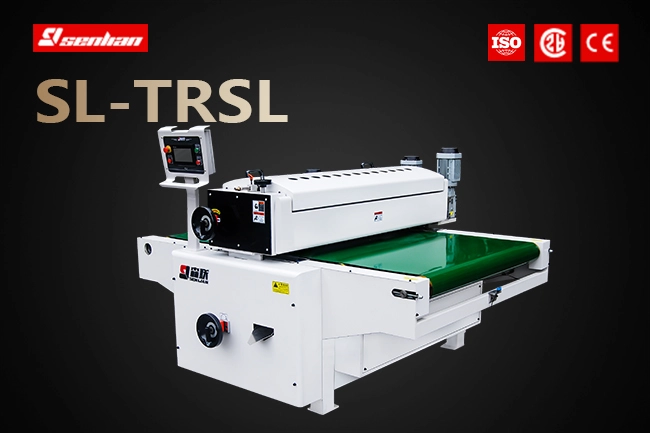
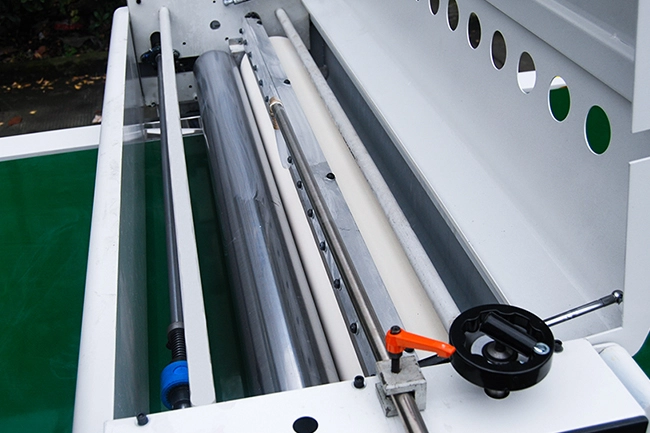
For thick-film color application on flat boards, coating pressure and roller timing need to work together. The SL-TRSL uses one polyurethane application roller with a doctor stainless steel roller rotating counterclockwise, bringing the coating into contact with the board only during the active coating cycle.
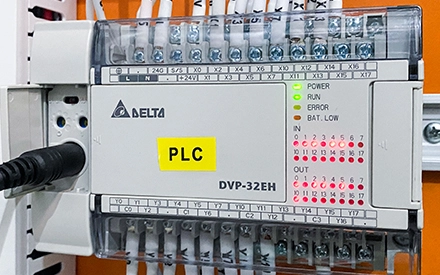
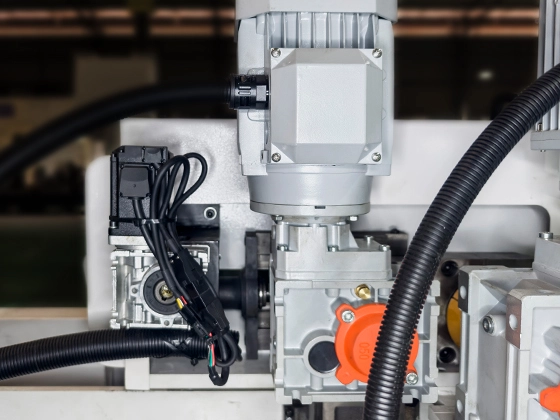
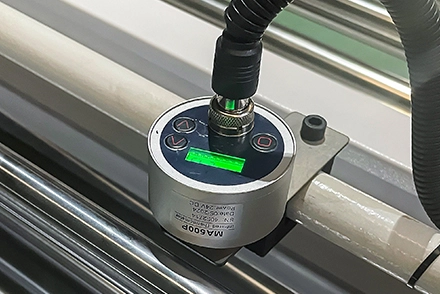
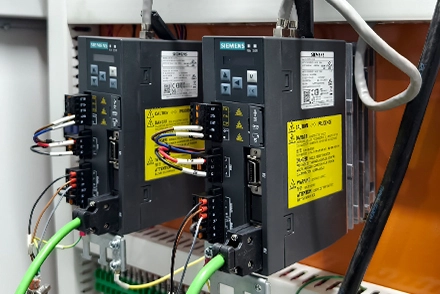
The operating sequence is controlled from the moment a board enters the conveyor. Photosensitive sensors and encoders detect the incoming panel, while the PLC calculates the signal and commands the lifting mechanism. Roller height is set according to board thickness; once the panel reaches the working position, the roller lowers to the coating surface and returns upward after the pass.
- Detect the panel before the coating cycle begins
- Bring the roller into contact only when the board reaches the working area
- Apply a thicker coating layer through counterclockwise roller rotation
- Lift the roller after the panel has passed
- Reduce paint accumulation at both ends during repeated production
Keep The Coating Gap Under Mechanical Control
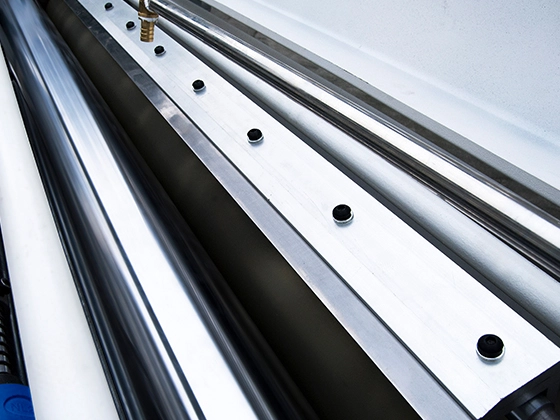
Consistent roller contact depends on the relationship between the polyurethane application roller and the doctor steel roller. A push-screw compensator sits beside the working rollers, allowing the gap to be balanced mechanically and helping correct deviation caused by vibration during operation. Stable adjustment limits uneven coating, paint leakage and unnecessary coating consumption.
Keep The Polyurethane Roller Ready For Production
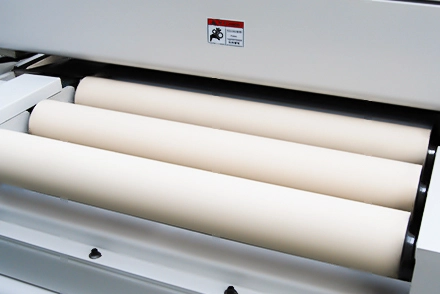
The polyurethane roller is made from cast polyurethane elastomer for use with self-drying color coatings. Its surface is intended to maintain paint transfer without swelling or cracking under the stated application conditions, while routine cleaning can be carried out with paint thinner or alcohol.
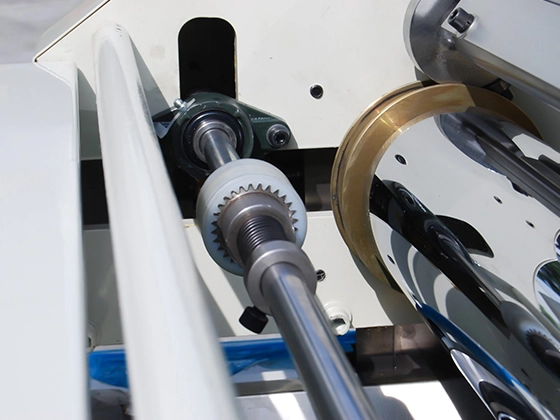
Roller maintenance is handled through a quick-disassembly structure. NSK bearings with ceramic protective shields connect the roller to the motor; after the coupling and bearings are released, the rubber roller can slide out through the opening in the upper mounting plate for grinding or replacement.
Return Excess Paint To The Coating Circuit
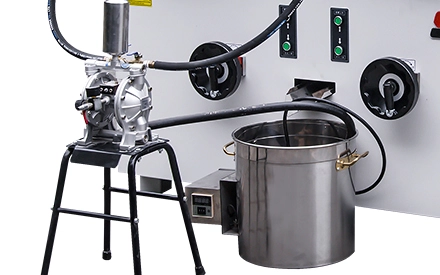
Unused coating is collected through the return trough and sent back into the process after passing through the pump unit. The paint circulation assembly includes a stainless steel collection container, pump and connected hoses positioned beside the machine.
Keeping excess material in circulation reduces the amount of coating left around the application section and supports continuous coloring work without relying on one-way paint consumption.
Configure The Working Arrangement Around Your Panels
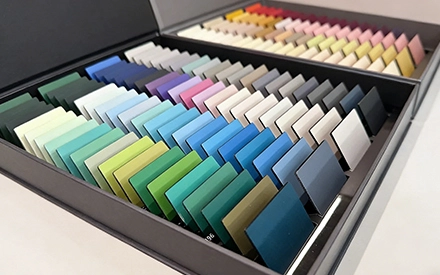
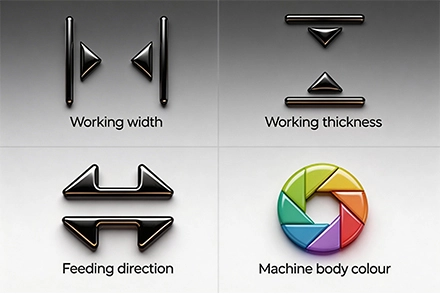
Working width, working thickness and feeding direction can be customized to the product and production layout. Roller materials can be adapted to different base materials and paints, while rotation direction and conveyor construction can be selected according to the required coating effect and conveying conditions.
Standard Parameters:





 Photo