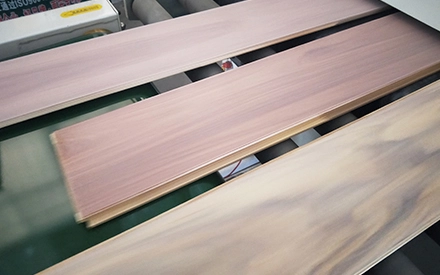
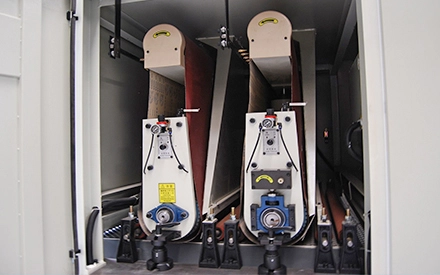
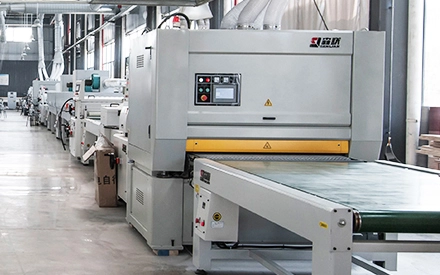
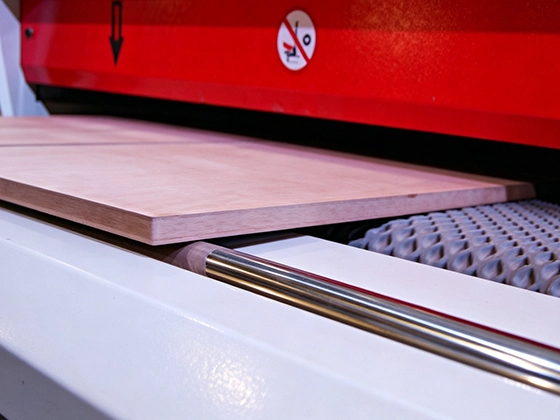
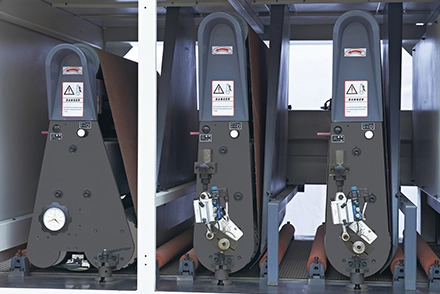
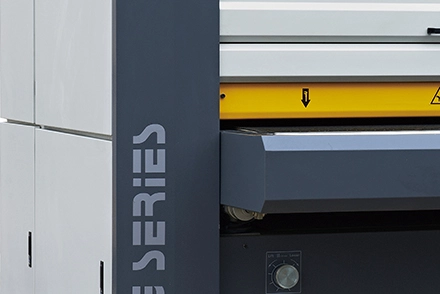
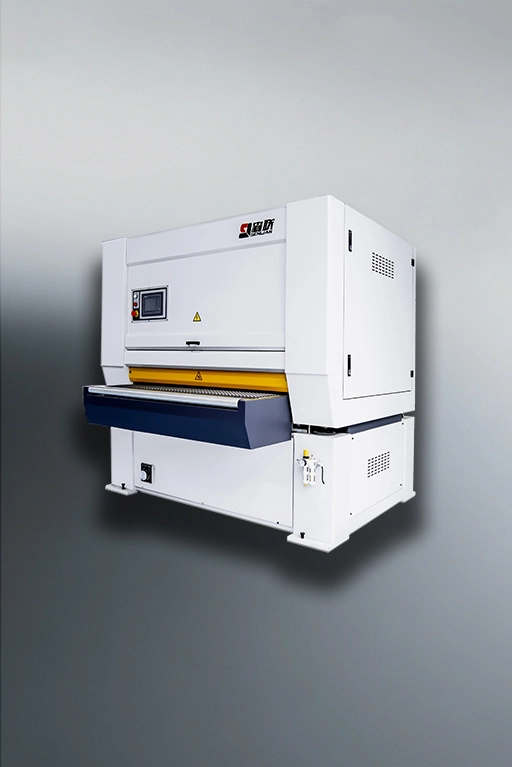
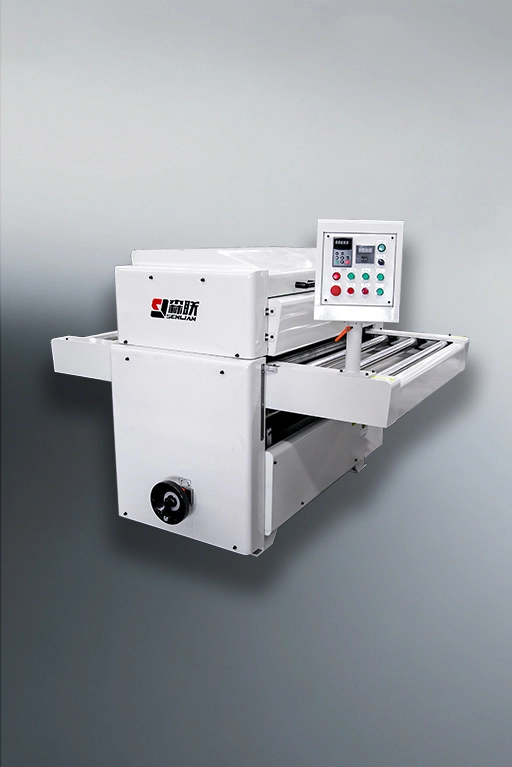
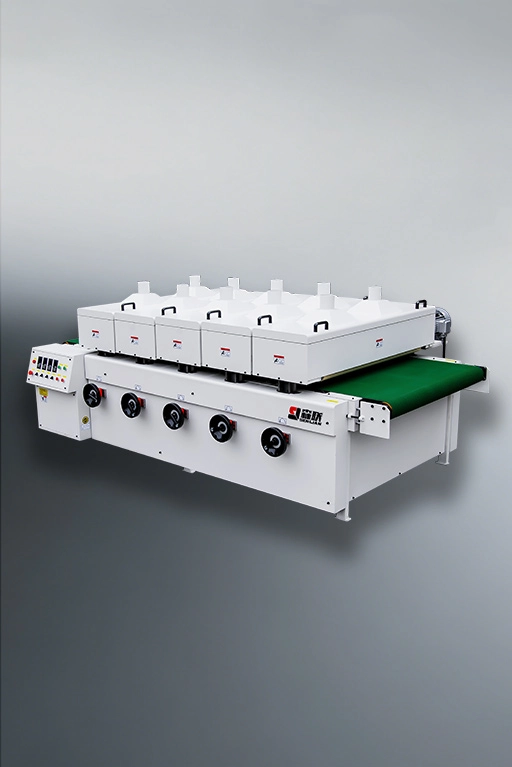
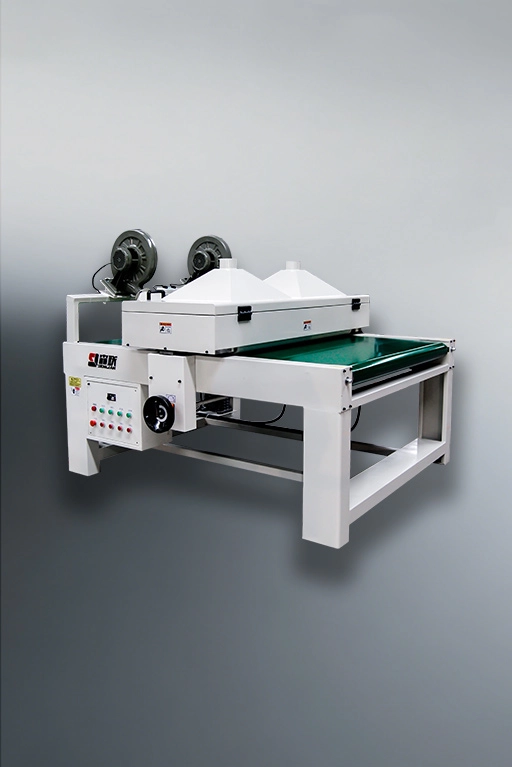
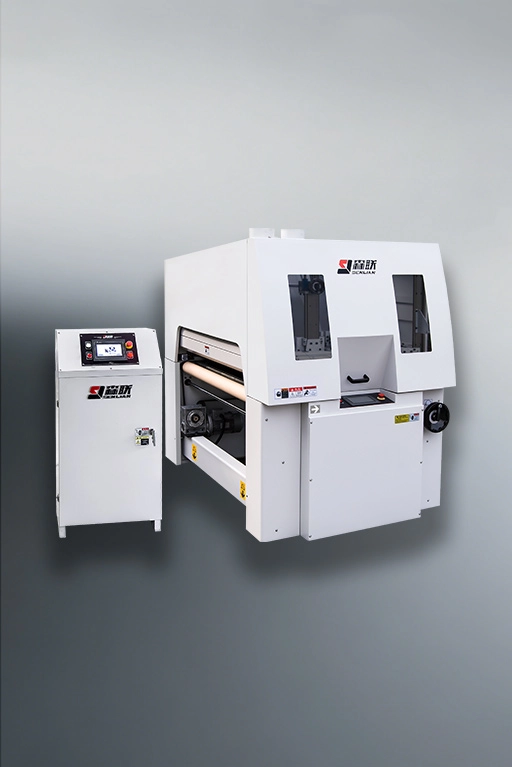
A wide belt sanding machine calibrates raw flat panels to a more consistent thickness while refining the surface before coating or further finishing. The sanding section uses vertically running abrasive belts, while the worktable remains fixed for easier connection with upstream and downstream equipment. Automatic thickness detection reads each incoming workpiece before sanding, helping the machine adjust the working clearance as panels move through the line.
Calibrate the Panel Before Surface Finishing
Set the sanding process around the incoming material and the amount of stock that needs to be removed. Confirm:
- Maximum panel width and thickness
- Substrate type and hardness
- Required sanding allowance
- Target surface condition
- Conveyor height and line speed
- Dust extraction connection
- Available installation space
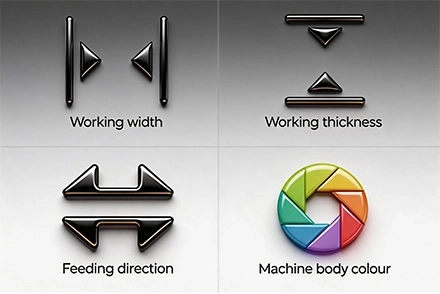
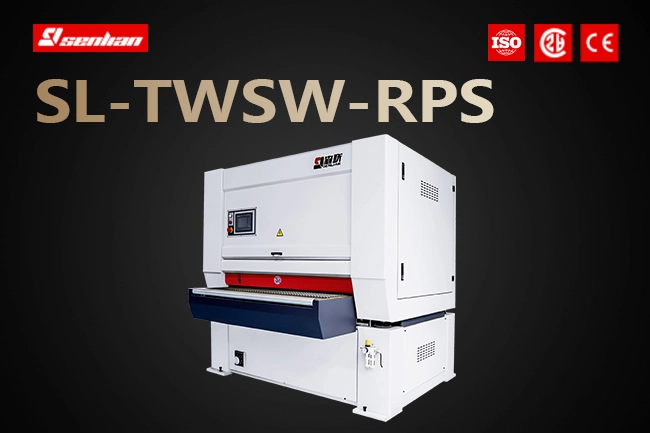
Three standard widths cover different panel formats. SL-TWSW-RPS1300 handles 40–1300 mm working widths, SL-TWSW-RPS1000 covers 40–1000 mm, and SL-TWSW-RPS630 covers 40–630 mm. Power and machine weight vary with the selected size.
Keep the Worktable Fixed While the Sanding Frames Move
The sanding frames move vertically to set the machining clearance, so the conveyor path can stay at a fixed height. This arrangement helps you connect the sander with other equipment in a continuous production line without raising and lowering the whole worktable.
At the inlet, automatic thickness detection measures the incoming workpiece before it reaches the abrasive belts. The sanding frames then work at the required height while the panel continues through the machine.
Combine Abrasive Belts With a Finishing Pad
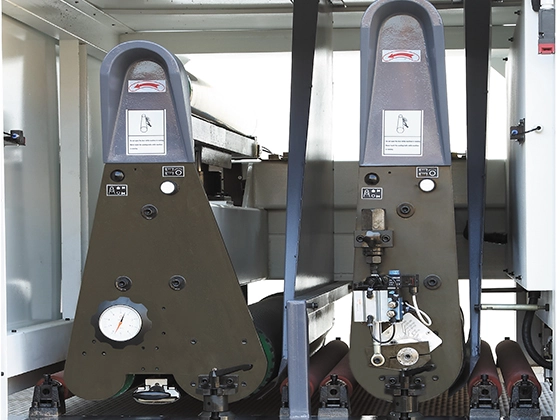
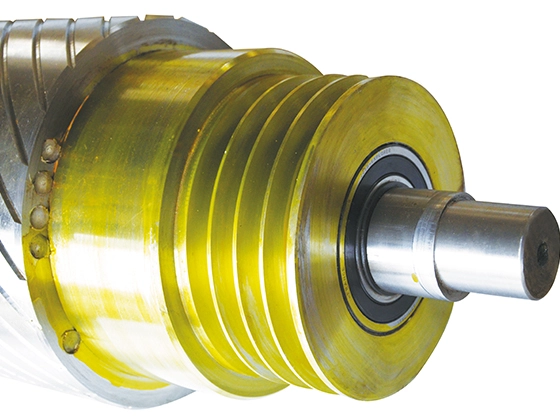
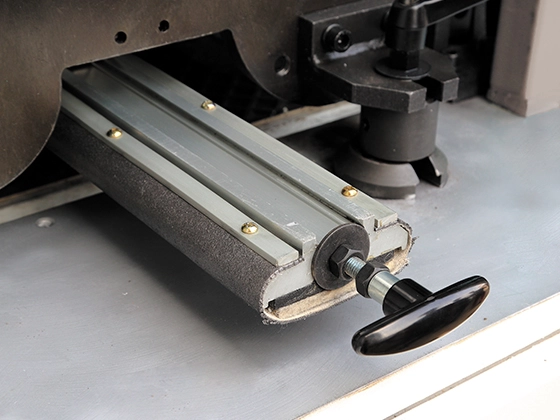
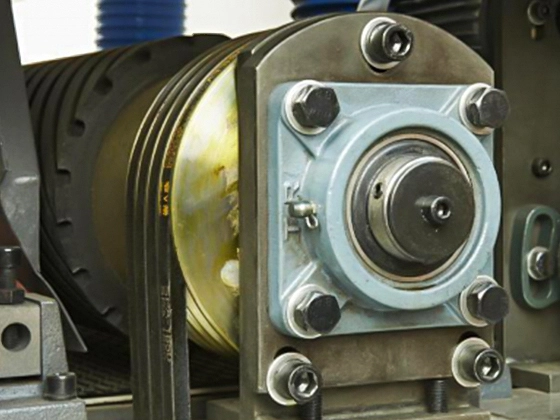
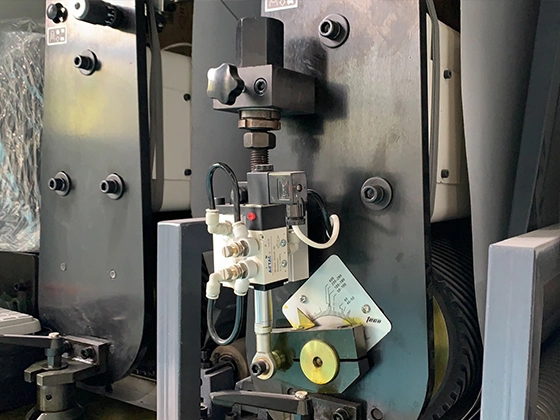
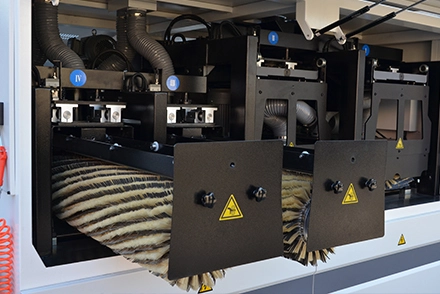
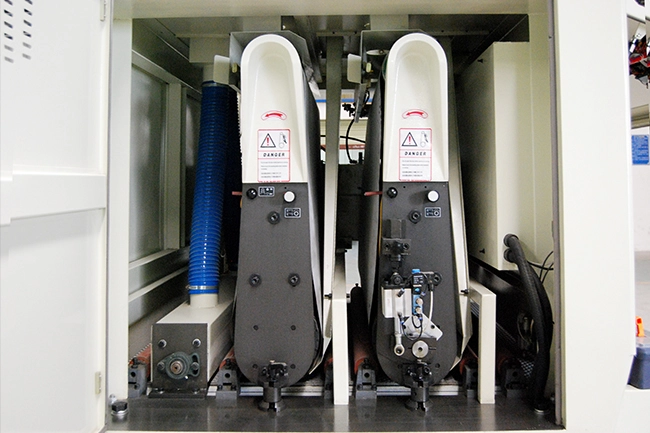
Abrasive belts handle the main thickness sanding operation. A wide aluminum-alloy sanding pad follows the abrasive section to refine the surface and remove remaining burrs. Independent shaft hanging plates allow each sanding shaft to be adjusted separately, while the eccentric-shaft lifting mechanism can raise the front sanding frame during standby or an emergency stop.
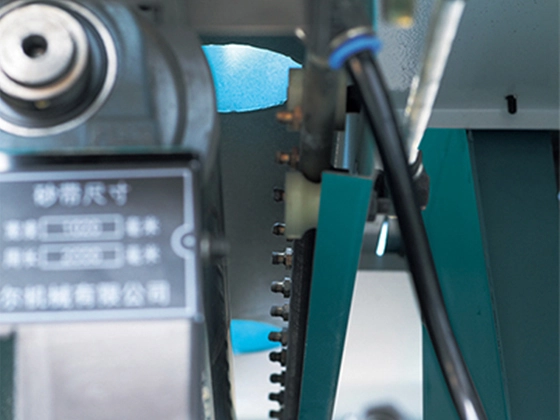
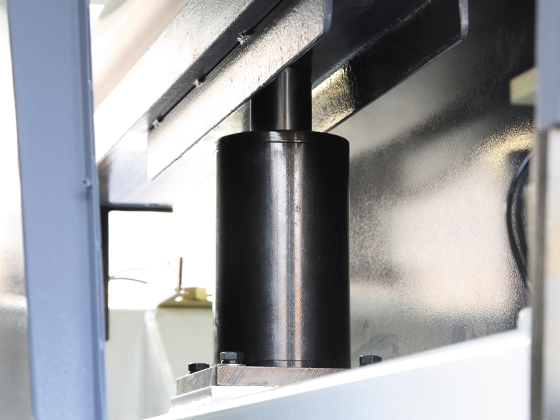
Oscillating air nozzles clear sanding dust from the abrasive belt during operation. The heavy lifting cylinder supports the vertical movement of the sanding assembly, while the main motor remains close to the machine base.
Connect Sanding With the Next Coating Stage
You can place the machine within a wider surface treatment process before coating. Where sanding prepares boards for continuous finishing, it can also feed into a UV roller coating line after the required surface condition is reached.
The sanding system can be configured with different working widths, sanding-frame quantities, and lifting methods to suit the panel format and production layout. Final sanding settings should follow the actual substrate hardness, removal requirement, and surface condition needed for the next process.
Standard Parameters:





 Photo
Photo