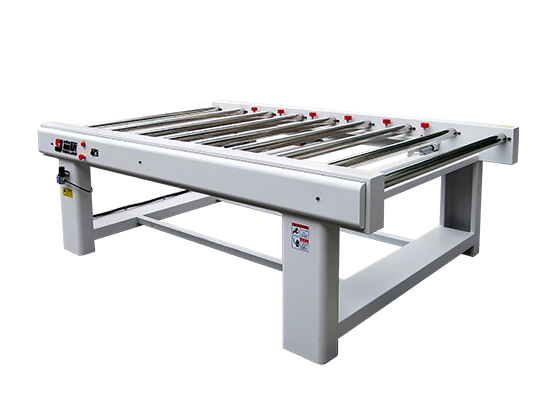
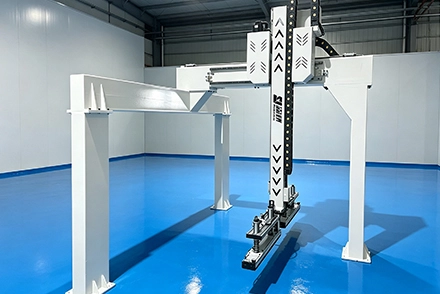
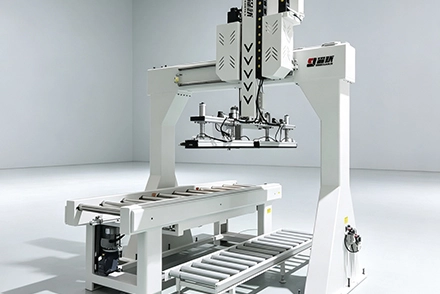
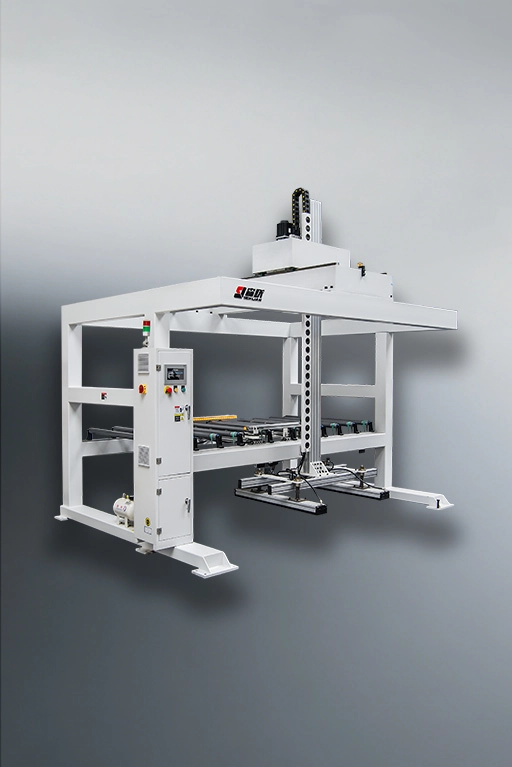
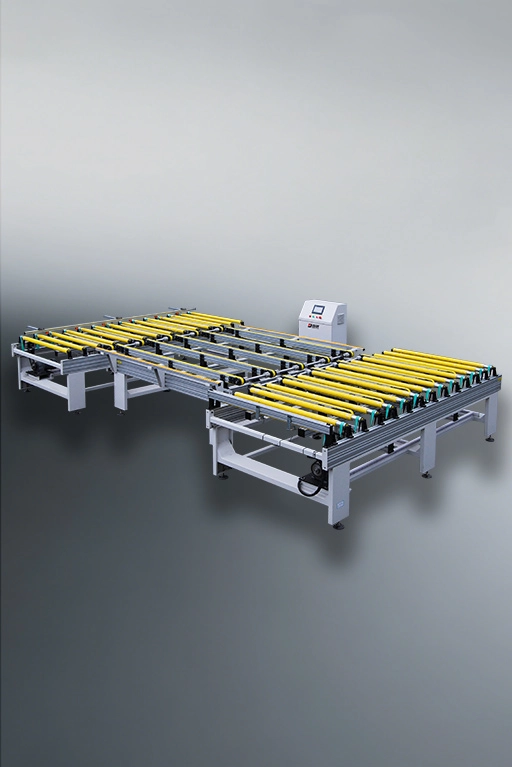
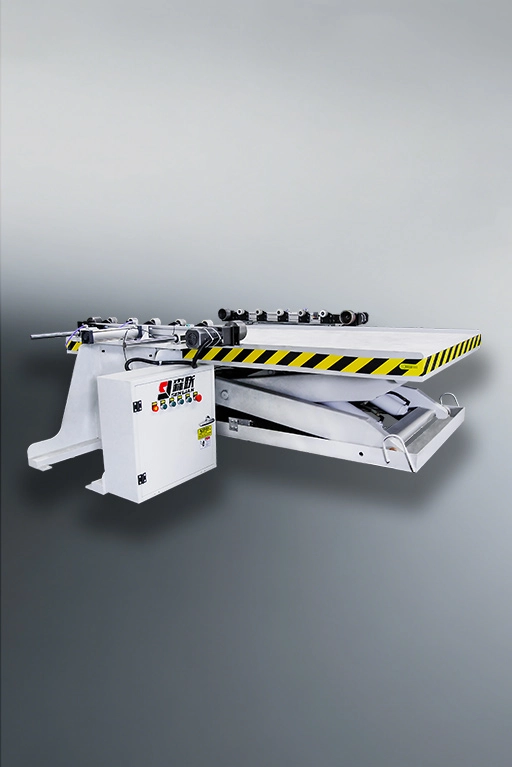
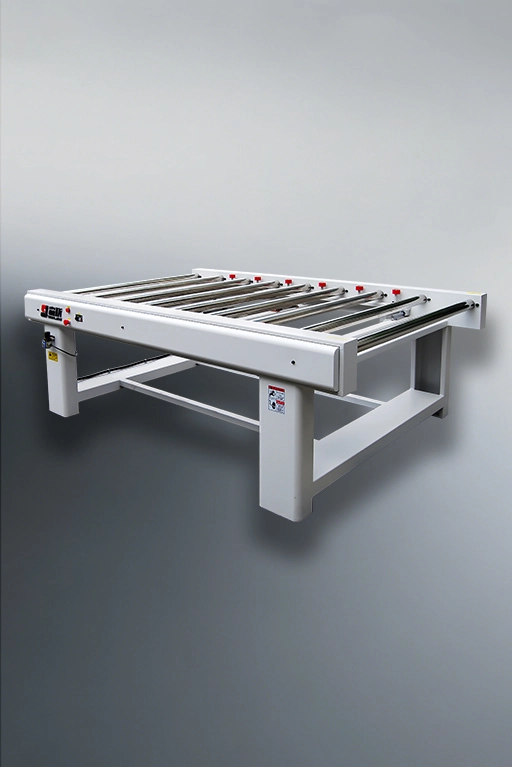
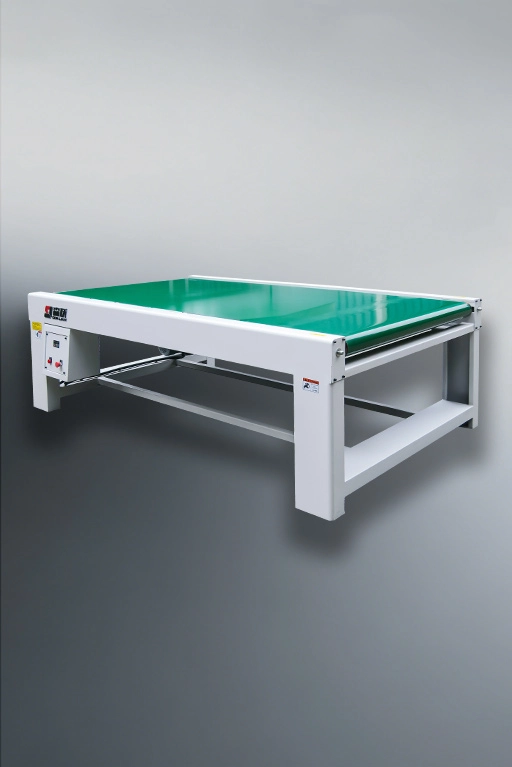
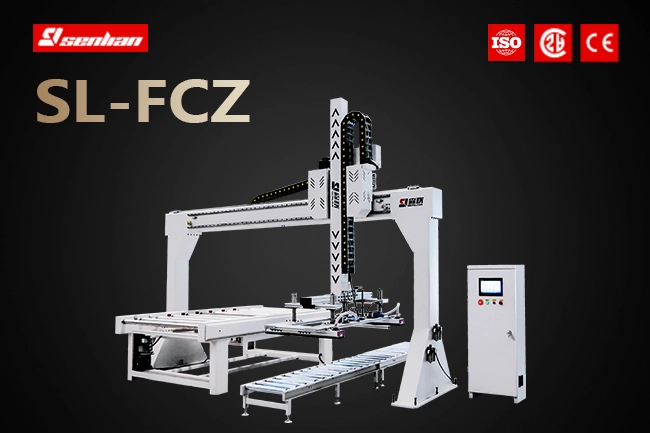
The automatic loading and unloading machine moves stacked flat panels between a pickup position and the production line through a dual-axis gantry path. Vacuum pickup lifts the workpiece, servo-driven travel carries it across the working area, and the arm lowers it onto the receiving position. An independent centering conveyor can then correct panel position before the next process, keeping transfer and line entry within one handling sequence.
Set the Handling Route Around Your Stack and Conveyor
Before configuration, confirm:
- Maximum and minimum panel width and length
- Workpiece weight and surface condition
- Pickup and placement positions
- Loading or unloading requirement
- Conveyor height and feeding direction
- Available installation space
- Air supply, voltage, and production pace
SL-FCZ1300 handles panels from 1000 to 1280 mm wide and 1500 to 3000 mm long. The listed average working speed is 3–5 pieces per minute. These dimensions define the standard working range, while custom sizing can adapt the equipment to different products and line arrangements.
Move Panels With a Continuous Gantry Path
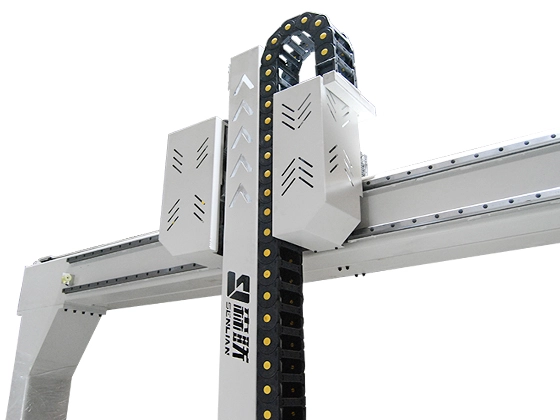
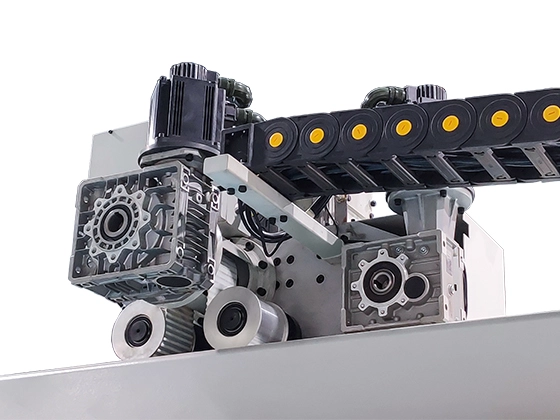
The double-leg gantry supports horizontal travel and vertical lifting above the material-transfer area. Servo-controlled axes coordinate pickup, travel, lowering, and release through one programmed cycle, reducing repeated manual lifting between a stack and the conveyor.
The motion path keeps the arm moving through the transfer sequence without repeated corner stops. Panels can enter or leave the line at a consistent handling position while the conveyor manages the next movement.
Match Vacuum Pickup to the Workpiece Surface
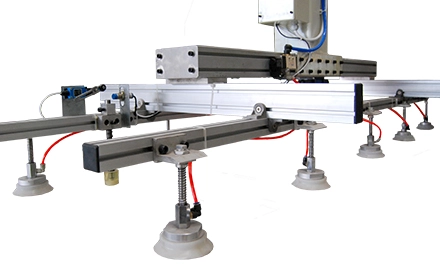
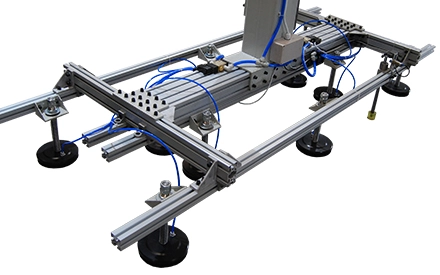
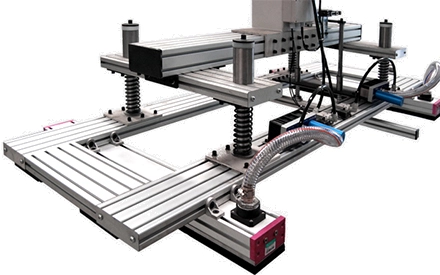
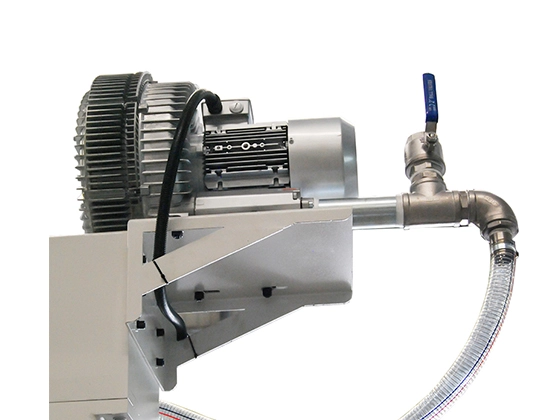
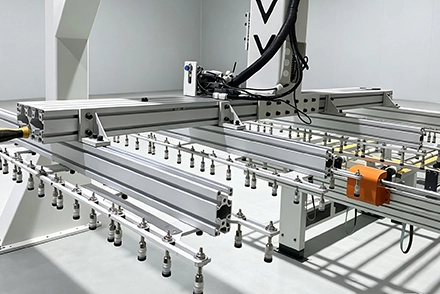
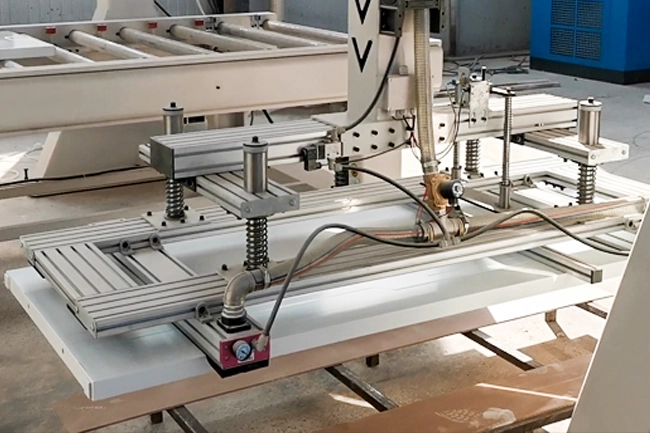
Surface condition affects how vacuum contact should be arranged. Smooth flat boards, textured materials, and larger porous workpieces may require different pickup components. Silicone disc, sponge disc, and sponge strip configurations are available, allowing the contact arrangement to follow the workpiece surface and size.
Connect Panel Handling With the Coating Process
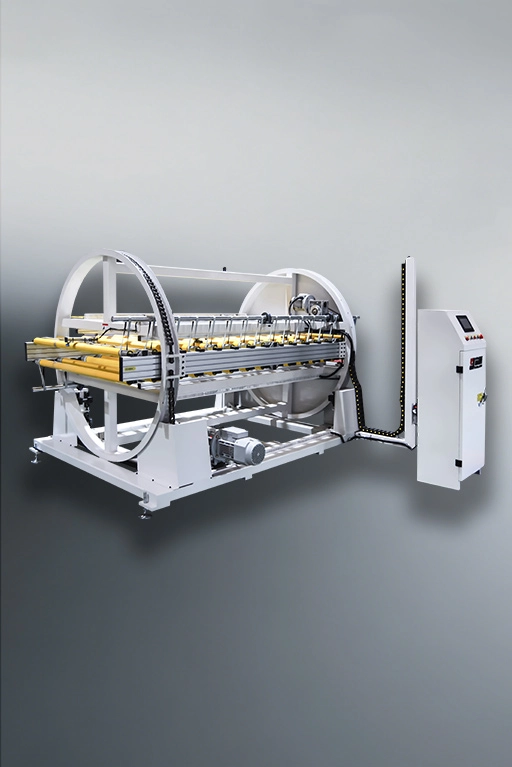
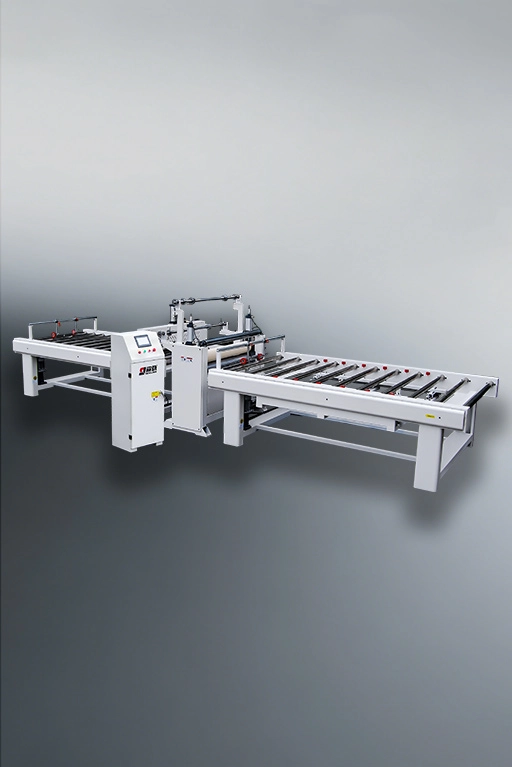
You can place the gantry system at the beginning of a line for automatic loading or at the discharge end for unloading. It can connect with the wider automatic conveyor system when the route also includes centering, turning, lifting, or cross-line transfer.
In a UV roller coating line, automated loading can feed panels into the finishing sequence before surface treatment and coating. At the opposite end, unloading can receive finished workpieces after the final process.
The final layout should follow the pickup position, conveyor height, travel distance, panel dimensions, and available space so the gantry movement stays aligned with the production route.
Standard Parameters:





 Photo