



Wood Coating
Wood and its derived artificial boards are among the most common materials used in coating processes. Their natural textures and structural advantages make them very popular in today's furniture, decoration, and construction sectors.
What is Wood Coating Solution?
Wood coating is an important surface finishing process that protects wooden products and improves appearance, durability, and performance. As a natural material, wood is indispensable in our daily lives, from the furniture we use throughout our homes to architectural decoration. Surface coating processes for wood not only enhance its aesthetic value and meet diverse decorative needs but also improve its performance, protecting it from external damage such as moisture, UV rays, and abrasion, thus extending the lifespan of the products.
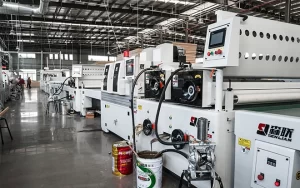
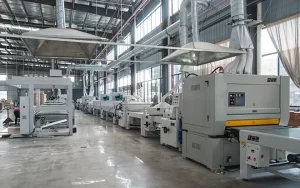
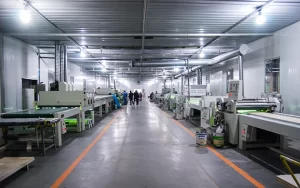
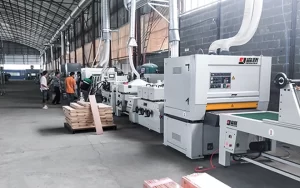
As an expert in automatic coating equipment, Senlian has developed flexible and efficient wood coating solutions based on its extensive experience serving thousands of wood product manufacturers. These solutions encompass the application characteristics, processing procedures, advanced technologies, and modular equipment for various wood products. This system empowers wood product manufacturers to strengthen their core competitiveness and expand their development opportunities at a lower cost, with higher efficiency and superior quality.
What are the features of Wood Material?
Solid Wood
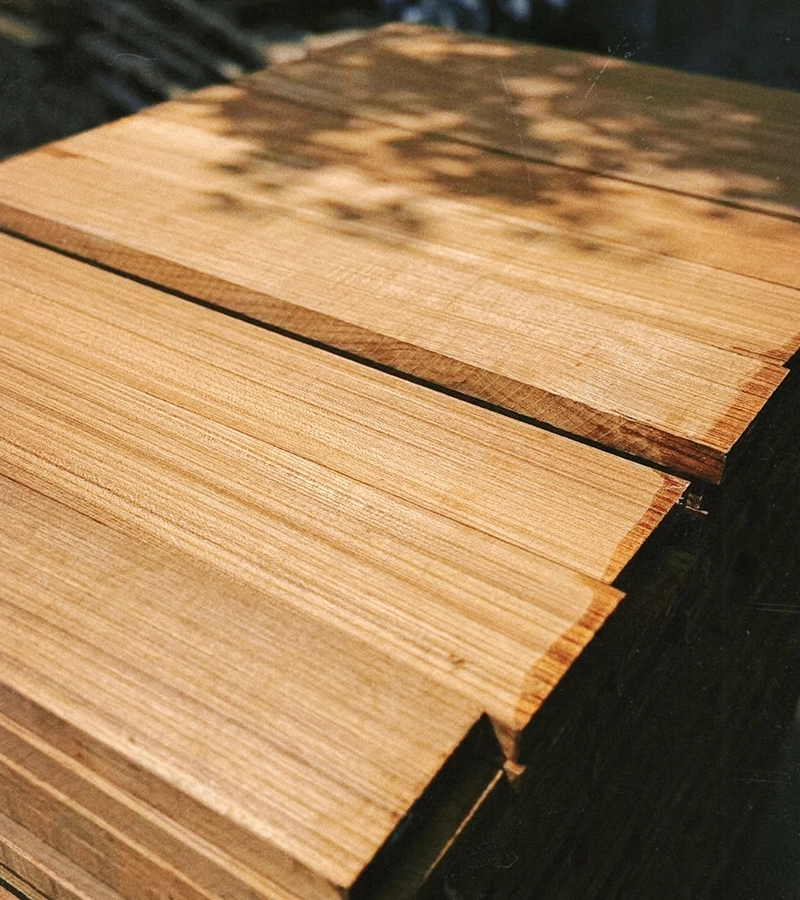
Made from natural wood, retaining the wood's grain, pores, and fiber structure. Common solid wood materials include pine, oak, birch, and walnut, which share the following characteristics:
- Significant fluctuations in moisture content: Due to environmental influences, when the moisture content of solid wood is too high, water evaporation can cause blistering and cracking of the coating. When the moisture content is too low, the wood's water absorption can lead to excessive paint penetration, uneven coating thickness, and, later, a finished product prone to coating lifting and peeling due to water absorption and expansion. Therefore, the ideal moisture content for solid wood before coating is 8%-12%.
- Texture and pore differences: The depth of wood grain and the size of pores vary depending on the tree species. When coating substrates with deep grain and large pores, such as oak and ash, we should enhance the coating's penetration and sealing. When coating substrates with fine-grained, low-porosity features, such as birch and maple, we should carefully adjust the coating viscosity to improve leveling and avoid quality defects, such as paint buildup and the orange peel effect.
- Fiber direction and stress: Solid wood fibers have a distinct directionality, and the shrinkage and expansion rates differ in the radial and tangential directions. After coating, internal stress may be generated by changes in environmental temperature and humidity, leading to coating cracking. Therefore, we stabilize the substrate through carefully designed pre-processes, such as drying, sanding, penetration, and filling, and then perform multi-step coating tailored to the wood's characteristics.
Artificial Boards (such as MDF)
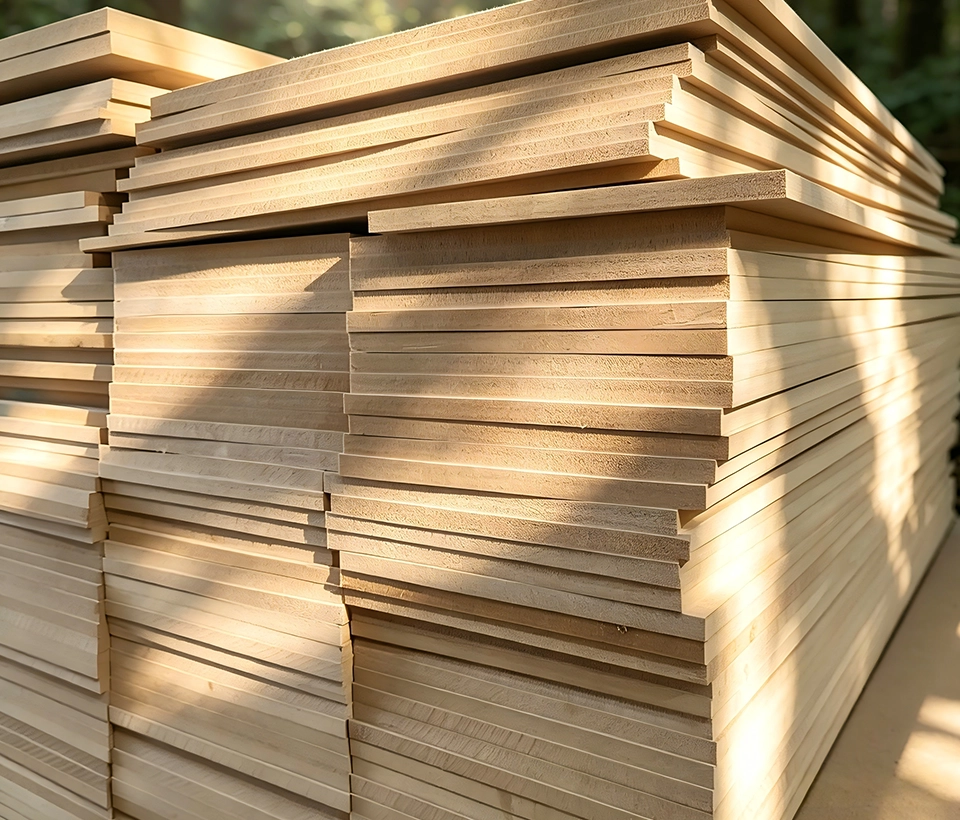
Made from wood fibers or other plant fibers, through processes of crushing, fiber separation, gluing, and hot pressing, it has the following characteristics:
- Dense structure and smooth surface: MDF has a dense fiber arrangement with no obvious natural grain, resulting in a highly smooth surface. This facilitates achieving consistent coating thickness. However, it's important to improve the coating's penetration and adhesion to the MDF surface to prevent delamination.
- Edges have higher water absorption than surfaces: The fibers at the edges of MDF are looser, resulting in a higher porosity than the board's surface. This makes the edges a weak point in the coating process. We usually employ techniques such as edge sealing and edge coating to provide a more refined treatment for MDF edges.
- Excellent processing performance and adaptability to diverse designs: MDF is easy to saw, drill, and engrave, allowing it to be processed into various complex and irregularly shaped structures. Furthermore, its surface is highly compatible with various coatings and finishing materials. It is compatible not only with UV and PU paints but also with wood veneer, melamine paper, and PVC film, offering a wide range of finishing options.
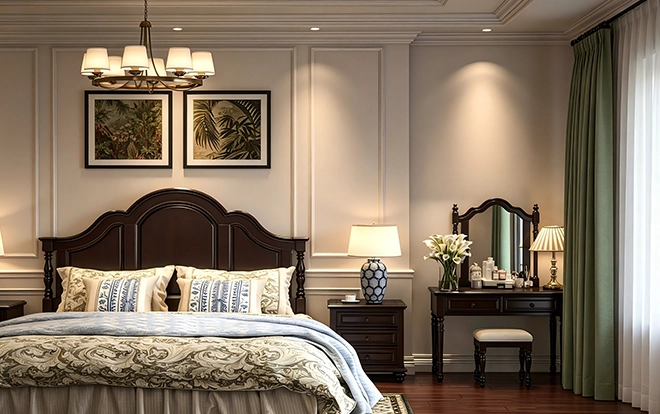
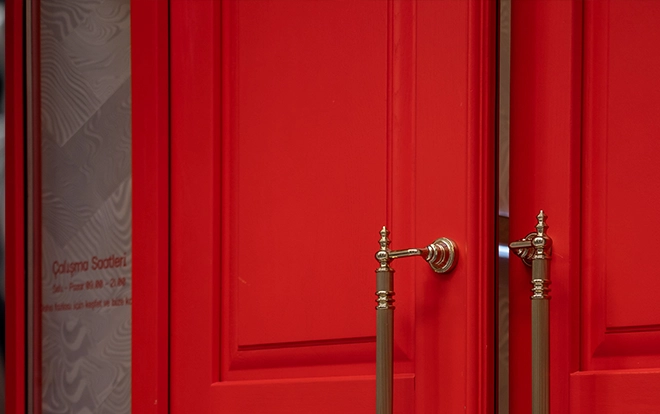
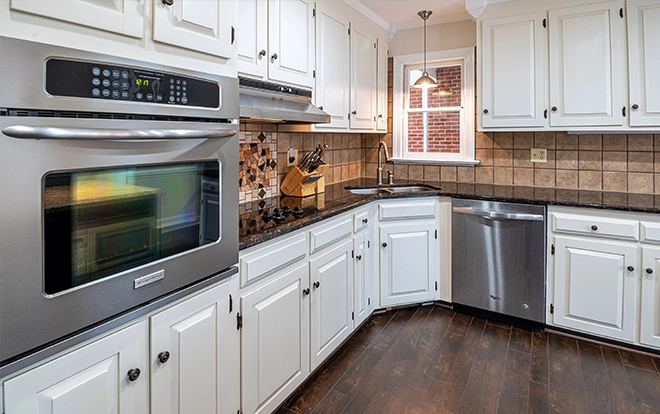
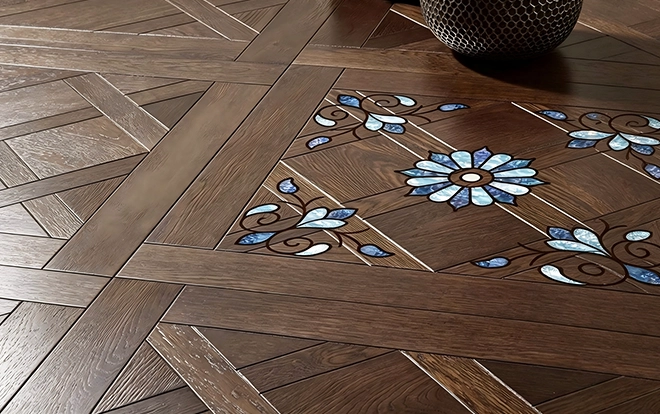
Wood Application
What are the processes of Wood Coating?
After the wood has been processed from raw material, cut to semi-finished dimensions, and shaped into the desired form, it typically undergoes the following coating processes (one or more): pre-treatment, coloring, brushing, sealing, priming, sanding, topcoating, leveling, and drying. Different wood coating machines are used throughout these processes, including roller coating machines, curtain coating machines, and spray painting equipment, depending on the required finishing effect.
- Pre-treatment: Eliminate substrate defects and stabilize the substrate's condition, creating favorable conditions for subsequent coating.
- Coloring and Brushing: The staining process involves allowing the dye to penetrate the wood's pores, followed by wiping to enhance the three-dimensional effect of the wood grain. This is commonly achieved using water-based or oil-based staining techniques.
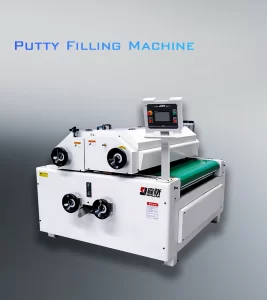
- Sealing and Priming: By penetrating and filling the wood pores with putty, this process prevents excessive reaction between the substrate and subsequent coatings, improving coating adhesion and increasing coating thickness.
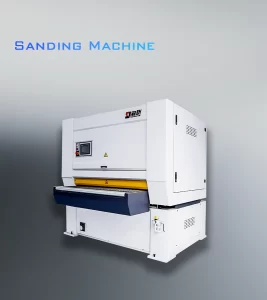
- Sanding: Substrate sanding ensures consistent thickness and surface flatness; fine-sanding the primer coat results in a smoother, more even coating.
- Topcoating: The finish directly determines the product's appearance, texture, and surface performance. For solid wood, transparent water-based or PU topcoats are preferred to preserve the natural wood grain, while artificial boards usually use UV or PU topcoats.
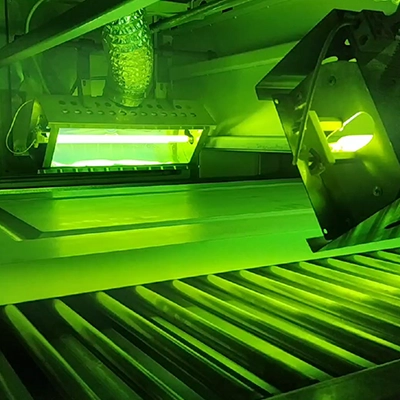
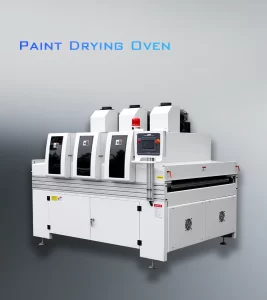
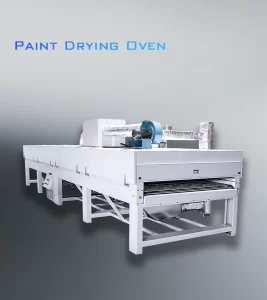
- Leveling and Drying: First, air bubbles in the coating are removed to accelerate uniform surface leveling. Then, through a UV photochemical reaction or high-temperature thermal treatment, the coating is thoroughly dried while its hardness is enhanced.

What techniques are involved in Wood Coating?
Roller Coating
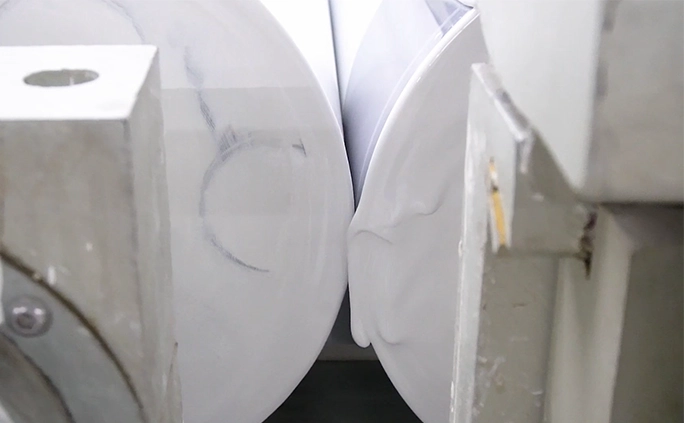
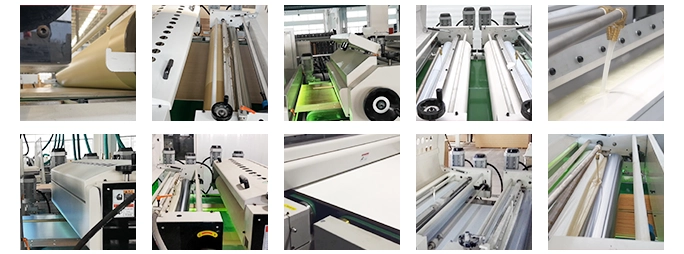
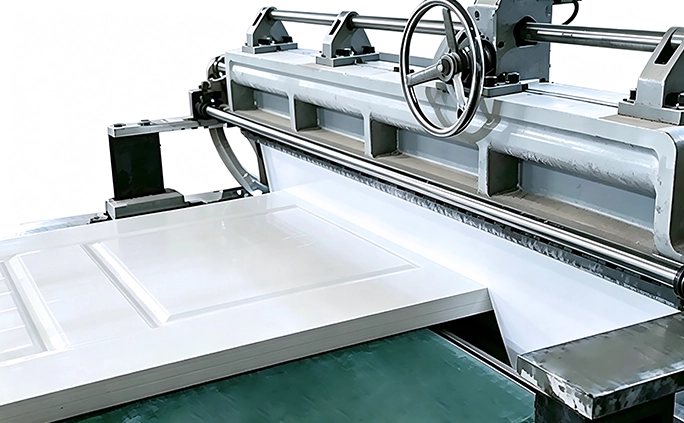
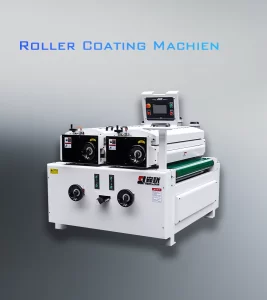
Roller coating machines are commonly used in wood coating for applying uniform coatings on flat wooden surfaces. Whether for flat solid wood, artificial boards, or wooden boards with shallow grooves, roller coating machines are the preferred solution for wood coating due to their high paint utilization rate and excellent production efficiency of 8-12m/min.
Curtain Coating
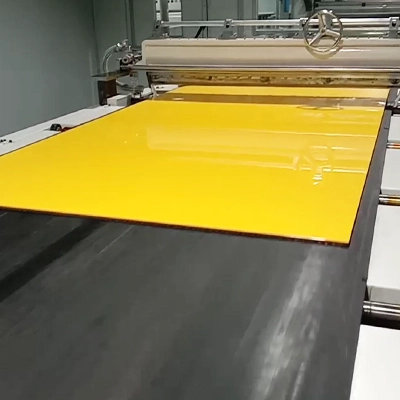
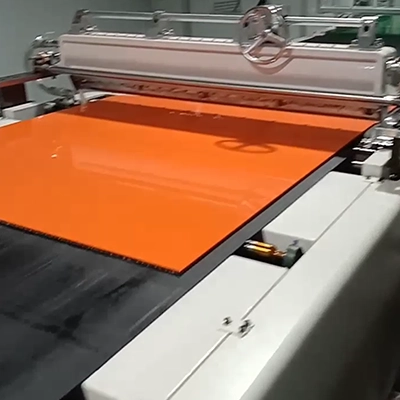
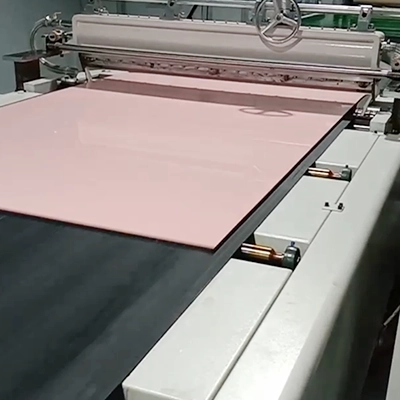
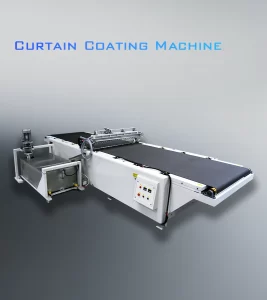
Curtain coating machines provide continuous coating application for wooden panels requiring consistent surface coverage. For wood products requiring a high-gloss finish or a one-pass thick coat, a curtain coating machine is undoubtedly an ideal choice. It can be used with UV or polyurethane paints and, through careful design, avoids the formation of wave patterns.
Spray Painting
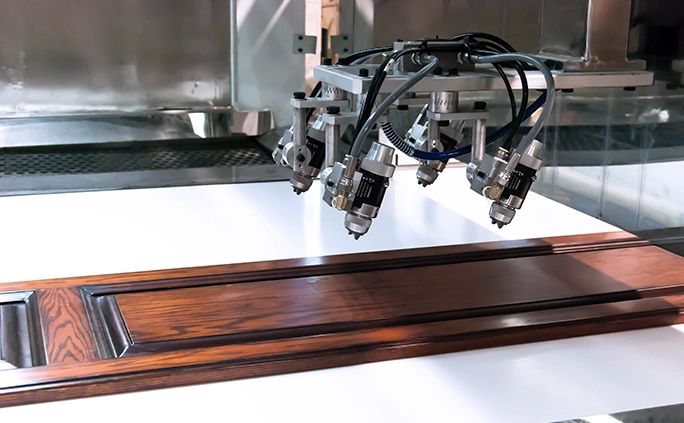
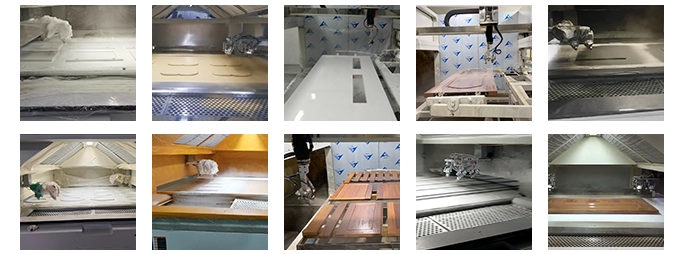
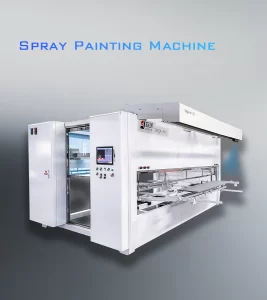
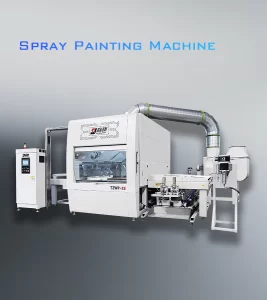
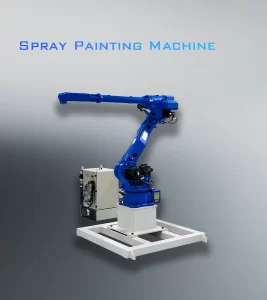
Spray painting equipment is suitable for complex surfaces and products with different shapes in wood coating applications. For wood products with decorative moldings, grooves, and complex shapes, spray painting is the most flexible and highly compatible solution. The paint is atomized and evenly applied to the surface and edges of the wood, resulting in a perfect coating.
Drying and Curing
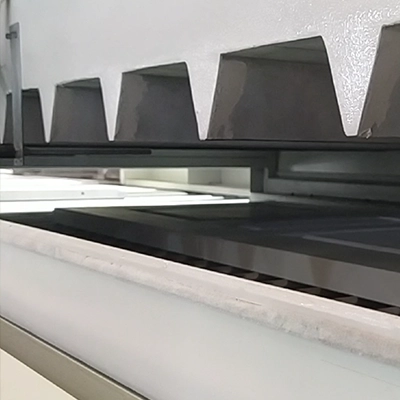
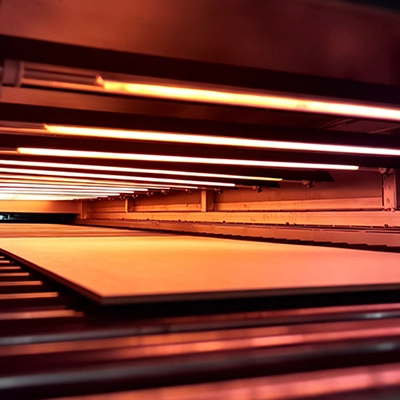
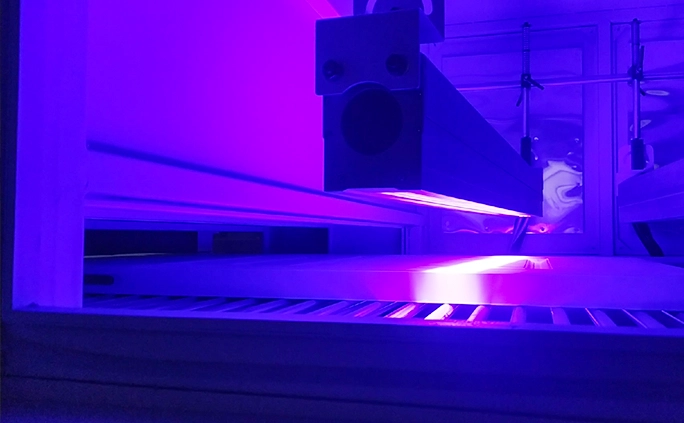
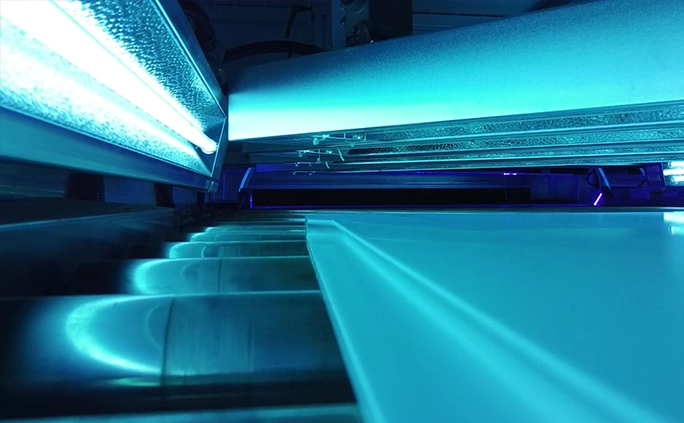
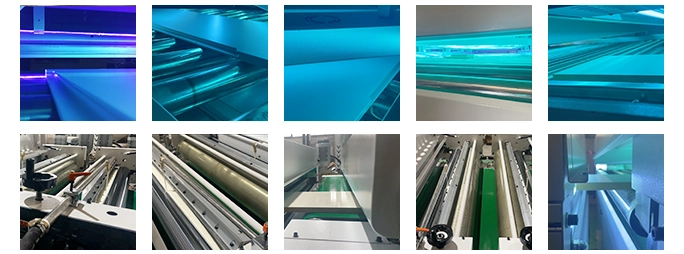
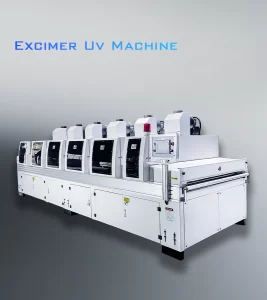
We offer corresponding solutions for different types of paints, including UV curing, LED curing, IR leveling, hot air drying, and high-temperature drying.
Excimer Soft-Touch
As an innovative technology, it can achieve an ultra-matte, soft-touch finish (a texture with a delicate, smooth feel like a baby's face) on the surface, edges, and handle of wood. This coating boasts a hardness of up to 4H and also features self-healing thermal repair capabilities.
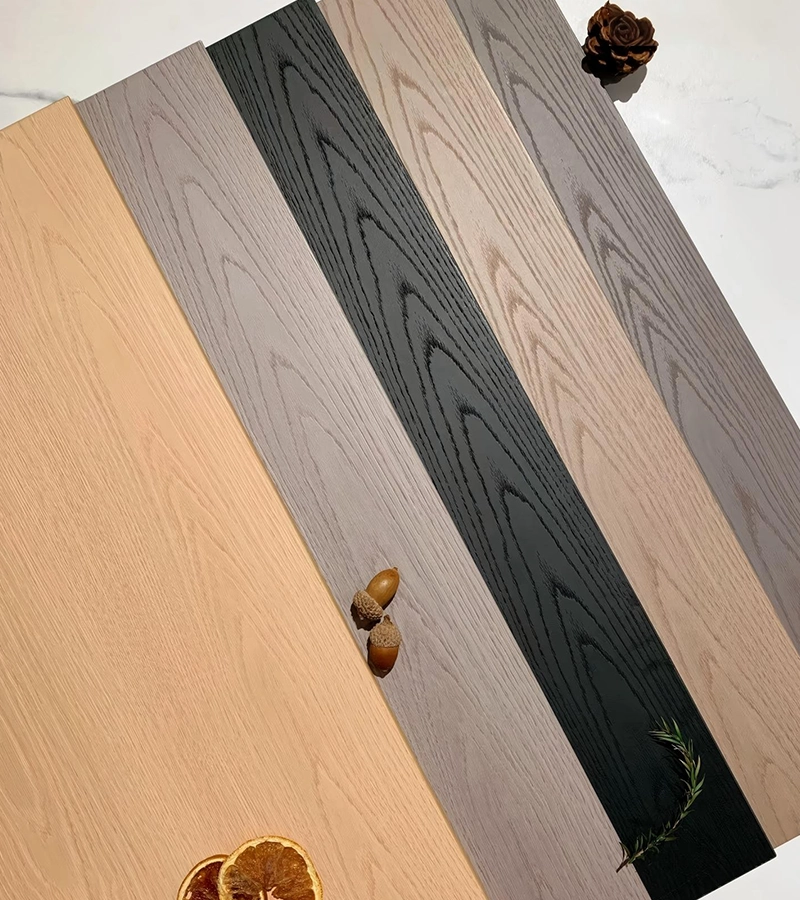
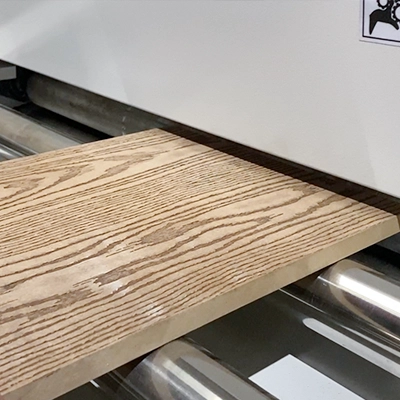
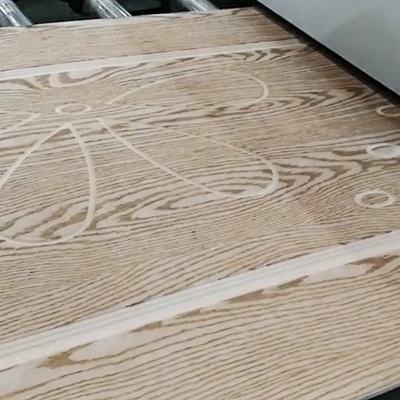
Wood Texture Embossing
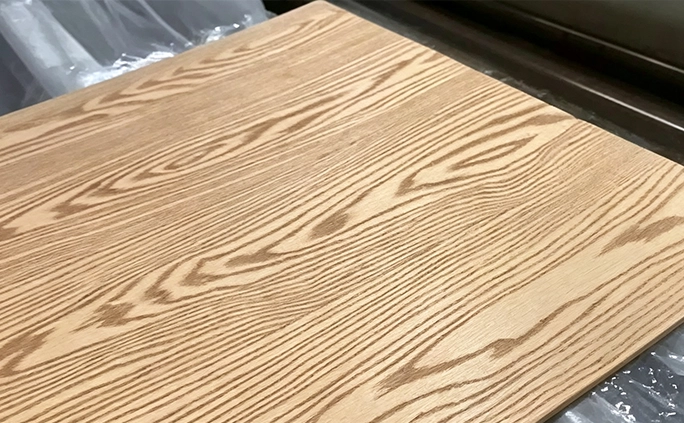
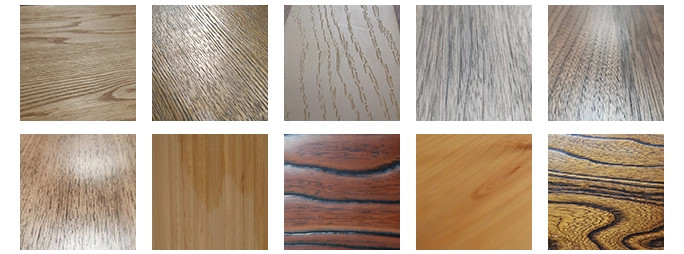
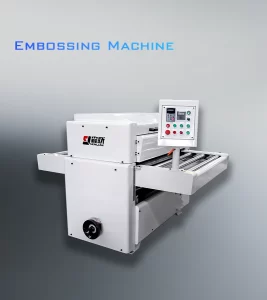
When you want to create popular, high-quality wood-grain patterns with base materials like MDF or rubberwood, this technology will help you achieve natural, realistic surface effects. Each piece is unique and random, and you can customize your preferred texture patterns.
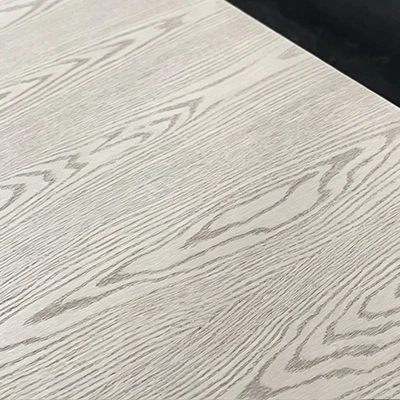
Wood Texture Wire Brushing
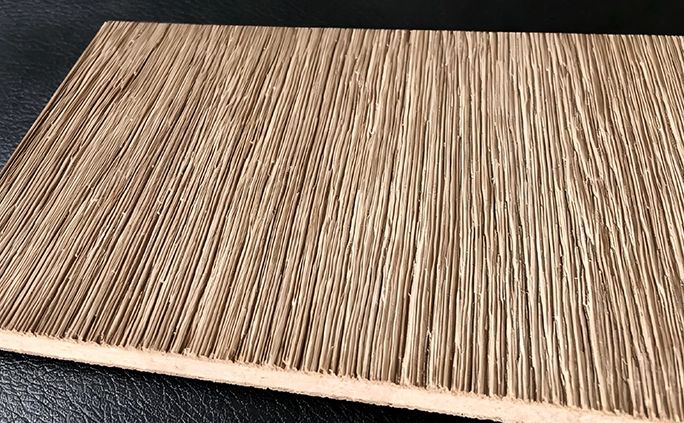
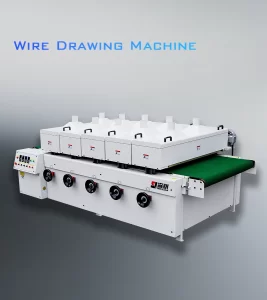
When you want to enhance the natural grain of solid wood, giving wood products a vintage, aged, artistic aesthetic, this technique is your ideal choice. It not only removes the softer wood surrounding the grain but also eliminates protruding burrs, resulting in a smoother surface.
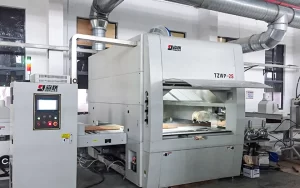
Here is our selected equipment to satisfy your Wood Coating needs.
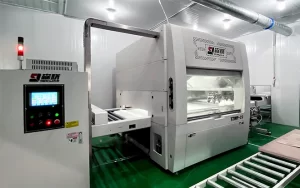
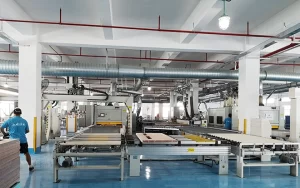
Explore our success stories in Wood Coating.
Comprehensive Wood Coating Solution
Before sales, we offer a comprehensive wood coating solution, including raw materials, coatings, equipment, and environmental facilities. After sales, we provide pre-shipment simulated production testing, installation, training, production support, and online assistance to fully ensure your wood coating quality and efficiency exceed expectations.