


Hot Tags
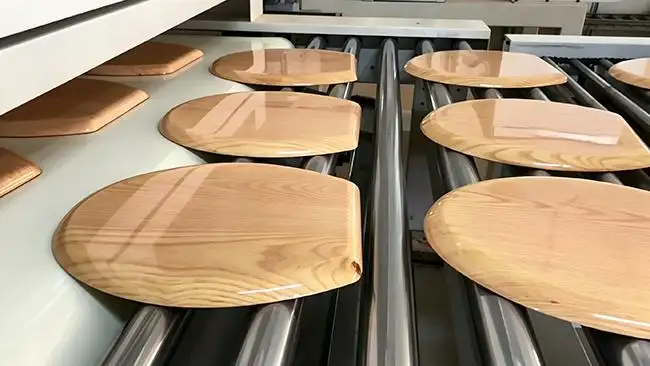
Automated Spray Coating Systems: How to Reduce Overspray and Paint Waste
October 20, 2026


In a spray coating line, paint that misses the workpiece creates more than material waste. It can increase filter loading, conveyor contamination, booth cleaning, exhaust demand, and coating cost per square meter.
Automated Spray Coating Systems address this problem by controlling where the coating is sprayed, when the guns turn on, how fast they move, and how the spray pattern follows a moving workpiece. The objective is not simply to use less paint. It is to achieve the required film thickness and surface quality while reducing coating deposited outside the target area.
What Does Paint Transfer Efficiency Actually Measure?
Paint transfer efficiency describes how much of the sprayed coating reaches the workpiece rather than becoming airborne mist, rebound, or booth and conveyor contamination.
A useful process relationship is:
Transfer Efficiency = Coating Deposited on the Workpiece ÷ Total Coating Sprayed × 100%
For production engineering, however, this percentage should not be evaluated alone.
| Metric | What It Tells the Buyer |
| Transfer efficiency | How much sprayed material reaches the substrate |
| Paint consumption per m² | Actual coating cost for production |
| Wet/dry film thickness | Whether the required coating build is achieved |
| Film uniformity | Whether coating is distributed consistently |
| Overspray level | How much coating enters belts, filters, and booth surfaces |
The real target for Automated Spray Coating Systems is therefore controlled deposition—not simply a high transfer-efficiency number.
Why Does Overspray Occur?
Overspray normally comes from several interacting process variables.
Spray Pattern Wider Than the Workpiece
If the spray fan extends beyond the panel edges, part of every pass misses the product.
Incorrect Gun Distance
Excessive gun-to-workpiece distance allows the spray plume to expand before reaching the surface. Too little distance can create excessive local deposition, uneven atomization, or rebound.
Poor Spray Overlap
Adjacent spray passes must overlap enough to avoid striping, but excessive overlap repeatedly deposits paint in the same area.
This relationship is important:
Spray Width + Gun Travel + Overlap + Coating Flow = Deposition Per Unit Area
Spraying Empty Conveyor Areas
A spray gun operating before the panel arrives—or after it leaves—sends coating directly onto the conveyor.
This is one area where automation can reduce avoidable overspray significantly.
Workpiece Detection Controls the Actual Spray Window
Modern Automated Spray Coating Systems can detect each panel before it enters the active spraying zone.
The control sequence becomes:
Workpiece Detection → Position Signal → Spray Trigger → Reciprocating Motion → Spray Stop
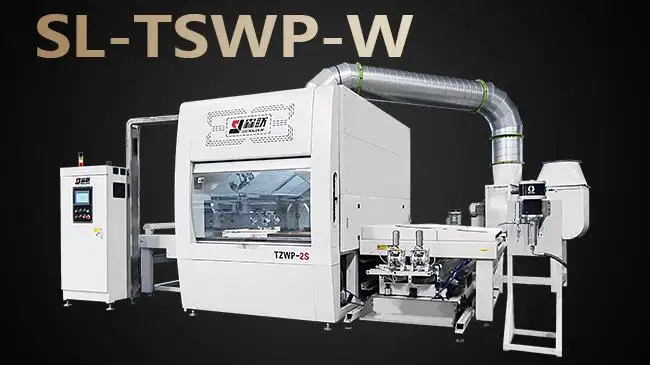
Senlian's SL-TSWP-W reciprocating spray coating machine uses a Bonner light curtain to detect incoming workpieces. The control system can then adjust gun activation according to the actual panel position instead of continuously spraying empty conveyor space.
This matters particularly when a line processes panels with different lengths or spacing.
Gun Speed and Conveyor Speed Must Be Matched
One of the most important characteristics of Automated Spray Coating Systems is repeatable motion control.
For a reciprocating system, coating deposition depends on the interaction between:
Gun Speed × Conveyor Speed × Spray Width × Overlap × Paint Flow
A spray gun moving too slowly across the panel can create excessive wet-film build and increase sagging risk. Moving too quickly may leave insufficient deposition and require additional passes.
Conveyor speed creates another variable. Increasing line speed without adjusting gun movement or coating flow may reduce film thickness.
Senlian's standard SL-TSWP-W specification provides two independent servo-driven reciprocating axes with eight adjustable GRACO Air-Mix guns. The manufacturer lists an average gun speed of 1–1.8 m/s, conveyor working speed of 3–7 m/min, and maximum spray width of 1280 mm. These are machine specifications rather than universal settings; actual parameters must be matched to coating viscosity, workpiece geometry, target film build, and finish requirements.
How Air-Mix Atomization Influences Overspray
Atomization quality directly affects transfer behavior.
Air-Mix spraying combines coating pressure with controlled auxiliary air to form the spray pattern. The goal is not simply to create the smallest possible droplets.
Over-atomization can produce very fine particles that remain airborne more easily.
Under-atomization can produce coarse droplets, uneven surface texture, and poor film distribution.
The correct setting depends on:
•Coating viscosity and solids content;
•Fluid pressure and flow rate;
•Atomizing air;
•Nozzle selection;
•Spray distance;
•Required surface finish.
Senlian's reciprocating system uses eight adjustable GRACO medium-pressure Air-Mix spray guns. The product page also specifies a GRACO Merkur bellows plunger pump with a 24:1 pressure ratio and 9 L flow rate.
Booth Airflow Is Part of Overspray Control
Even correctly atomized paint does not all reach the substrate. Airborne mist must be managed without unnecessarily disturbing the spray pattern.
A typical airflow path is:
Filtered Fresh Air → Spray Zone → Airborne Mist → Filtration → Exhaust
Insufficient airflow can allow paint mist to remain around the product. Poorly balanced airflow can also influence spray behavior.
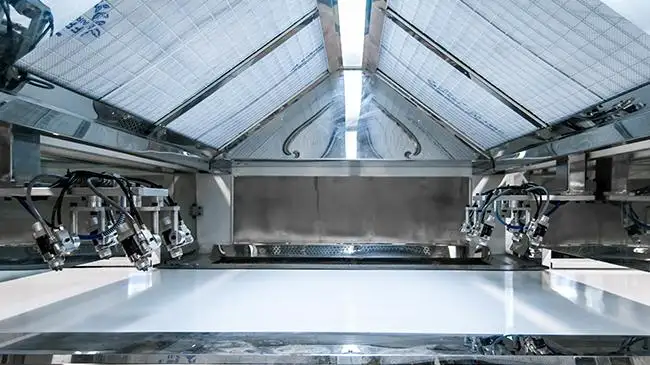
The Senlian SL-TSWP-W uses filtered air entering from the upper section of the enclosed booth, directing airborne mist toward rear filtration and exhaust. Its published positive-pressure airflow range is 8,000–12,000 m³/h.
That number should be treated as a specification for this machine configuration, not as a universal airflow requirement for every spray booth.
What Happens to Paint That Misses the Panel?
Overspray normally ends up in three places:
| Location | Production Effect |
| Airborne paint mist | Higher filtration and exhaust load |
| Conveyor belt | Cleaning demand and coating buildup |
| Booth surfaces | Maintenance and cleaning labor |
Senlian uses a reusable PE conveyor belt and an automatic belt-cleaning trolley that scrapes residual coating from the belt before subsequent cleaning stages.
However, paint recovery should not be confused with transfer efficiency.
The better process hierarchy is:
Prevent unnecessary spraying → Control overspray → Recover usable residual material
Automation Does Not Automatically Guarantee Low Paint Consumption
A poorly configured automatic machine can waste paint very consistently.
Compared with manual or basic spray control, Automated Spray Coating Systems provide better control over spray timing, gun trajectory, reciprocating speed, workpiece detection, and conveyor coordination. But these controls still require correct process settings.
For example, excessive flow, incorrect gun distance, unsuitable atomization, or too much spray overlap can increase coating consumption even when motion is fully automated.
How Should Paint Transfer Efficiency Be Verified?
Buyers should verify performance under their own production conditions.
A practical test should:
- Record the total coating consumed during a defined production batch.
- Calculate the total coated surface area.
- Measure wet or dry film thickness at several positions.
- Calculate coating consumption per square meter.
- Inspect film uniformity, edge coverage, orange peel, sagging, dry spray, and surface contamination.
Lower paint consumption only has value when the specified film thickness and finish quality are still achieved.
Senlian lists a paint utilization ratio of 80–95% for the SL-TSWP-W. Because actual utilization depends on the coating, panel dimensions, spray program, edge requirements, and operating conditions, buyers should verify the achievable result with representative workpieces and coatings.
What Should Buyers Specify Before Choosing a System?
Before comparing Automated Spray Coating Systems, provide the equipment supplier with:
•Workpiece length, width, thickness, and profile;
•Whether edges must also be coated;
•Coating chemistry and viscosity;
•Required wet or dry film thickness;
•Target production speed;
•Surface-quality requirements;
•Current paint consumption;
•Color-change frequency;
•Upstream and downstream equipment;
•Available factory layout.
Reciprocating spraying is especially practical for continuously conveyed flat or moderately profiled products. More complex three-dimensional parts, deep recesses, or multi-angle surfaces may require five-axis, 3D scanning, or robotic spraying instead.
Control the Entire Coating Process, Not One Number
Paint transfer efficiency is the result of a complete process:
Atomization + Spray Pattern + Gun Motion + Conveyor Speed + Trigger Timing + Workpiece Geometry + Booth Airflow + Film Thickness
For manufacturers evaluating Automated Spray Coating Systems for continuous panel finishing, Senlian's reciprocating spray coating machine provides a practical configuration combining two independently driven spray axes, eight Air-Mix guns, workpiece detection, PLC-controlled motion, filtered positive-pressure airflow, and automatic belt cleaning.
Rather than selecting a machine from a single utilization figure, buyers can provide Senlian with their panel dimensions, coating type, required film thickness, edge requirements, and production speed to determine whether a reciprocating configuration fits the actual finishing process.
FAQs
Q1. How does Senlian reduce unnecessary overspray?
Senlian uses workpiece detection, PLC-controlled gun triggering, reciprocating motion, and controlled spray zones to reduce spraying outside the actual panel area.
Q2. What spray guns are used in Senlian's reciprocating system?
The SL-TSWP-W uses eight adjustable GRACO medium-pressure Air-Mix spray guns mounted on two independently driven reciprocating axes.
Q3. What is the paint utilization ratio of the Senlian system?
Senlian lists a paint utilization ratio of 80–95% for its standard SL-TSWP1300-W configuration. Actual results depend on coating, workpiece geometry, spray settings, and production conditions.
Q4. How does Senlian detect incoming workpieces?
A Bonner light curtain detects the position of incoming products and works with solenoid valves and the control system to define the active spraying range.
Q5. What is the working speed of the Senlian reciprocating spray machine?
The average conveyor working speed is 3–7 m/min, while average spray gun speed is 1–1.8 m/s.